Latitude for a Closed Room
Nolan brings a ship’s archive to dinner with his sister. By the time the food arrives, he has already promised a stranger more than either of them can give.

Captain’s Log: 2734 — Argos
Nolan brings a ship’s archive to dinner with his sister. By the time the food arrives, he has already promised a stranger more than either of them can give.
From orbit, someone had drawn the storm around Argos in yellow. Nearer the ground it lost its edges. Rain entered the light of the Silent Void in long white lines and went sideways across the nose. Nolan flew the last kilometer by the blue lights on the backs of buildings. Someone on a roof took in a row of towels. Someone in the tower reminded him that the landing fee began at touchdown, including any minute he spent thinking about it.
Maris had sent him a photograph of the restaurant entrance. He had expected twelve directions and a warning about the stairs. The photograph was of a brass knuckle fitted to a door. You struck it against the wood. The restaurant's own sign had burned out, and the shop next door rented swimming fins.
He came early and waited outside until he could see her at a table. He had forgotten how easy it was to recognize her from behind. She sat with her coat still on, her hands low and out of sight, watching the other customers in the mirror over the bar.
She turned before he touched the door.
“You landed through that?”
“I went around most of it.”
“I saw you go past the window.”
He looked. There was a strip of runway visible above the old pumping wall, the strips of light now wavering through rain.
“You could have waved.”
“I was going to let you eat first.”
He pulled off his wet coat. At the table she moved a thin folder away from the edge to make room. He saw the corner of a paper sleeve through its cover and felt the charge of arriving with something she wanted. Ordinarily when they met he had a box of fruit she could get locally or news of a place where she had never intended to go.
“Before we start,” he said. “Would you like to know how to get into the signal house beneath your station?”
She looked at the empty plate in front of him.
“First I'd like to know if you know what you'd like to eat.”
He ordered the fish she recommended. It came from a nursery on the outer side of the seawall. A boy carried a jar of something alive and orange past the table. Nolan watched it close its hand around the stem of a herb inside.
When they were children their mother had occasionally brought home food that still needed a decision made about it. Once it had been two black crabs. He and Maris had put them under an overturned bucket with a wet towel and taken turns guarding them. Their father had let the game go on until they went to bed. Then he had cooked the crabs. The next day Maris had tasted the soup before she knew what was in it. Nolan had known at once. He had let her finish.
“You said the receiver kept the Blink,” Maris said.
“It kept everything it thought was worth buffering. That's an old habit of mine.”
“Have you listened?”
“The public audio, yes. Twice. The service channels are broken up in the archive. You need the original relay sequence to tell which things were heard and which were assembled afterward.”
“How do we get that?”
“There's a man who used to patch the links out of the old signal house. He repairs pilot sets across the basin now. He says he still has access to an inventory. I asked him if he would show us where the branch went.”
Maris waited.
“He wants to see a copy of the channel diagram,” Nolan said.
“Did you tell him you had one?”
“I told him you did.”
Something fell behind the bar. Two people went over to help pick it up. The waiter came with the little dish of fried leaves they put out while they cooked the fish. He asked if they wanted more bread. Maris said yes, and moved their water glasses so he could set the dish down.
“What did you tell him about me?” she asked after he left.
“That you traced a branch the official feed couldn't account for.”
“Did you give him my name?”
Nolan rubbed his thumb against a fault in the glaze on his plate.
“You have the same one I do.”
“I asked how you used it.”
There had been a small, admiring silence on the other end of the call when he mentioned the latch cycling. The repairman had said he would have loved to see it. That was a feeling Nolan knew how to use. He had used it with charter officers, frightened crews and people who thought they'd spent their last good years at a fuel dock. He talked about the astonishing thing in sufficient detail that they began to see themselves present when it happened. They nearly always forgave him for wanting them there. Sometimes they noticed what he'd neglected to tell them.
“It sounded like you were looking for more witnesses,” he said.
“I was. People who saw it. People who've chosen to be contacted.”
“This man could get us into a room the city forgot it had.”
“The city hasn't forgotten it. A crew still services the junction. They handed us a copy.”
He tried to imagine the repairman, presently expecting a tour, listening to an explanation of the difference between a forgotten room and a room unlocked on a maintenance schedule. For a second Nolan wanted to see Maris behind that locked door with all the old circuits juddering to life and no one else to ask except him. It was a clean, bright picture. The strength of his pleasure frightened him after it had already happened.
“Are you doing it now?” she said.
“Doing what?”
“Looking for somebody else to ask.”
The waiter put their dinner down between them. The skin on the fish had been slit at regular intervals so it wouldn't curl. Nolan watched Maris lift one of the blackened bones clear of her plate and lay it quietly beside her knife.
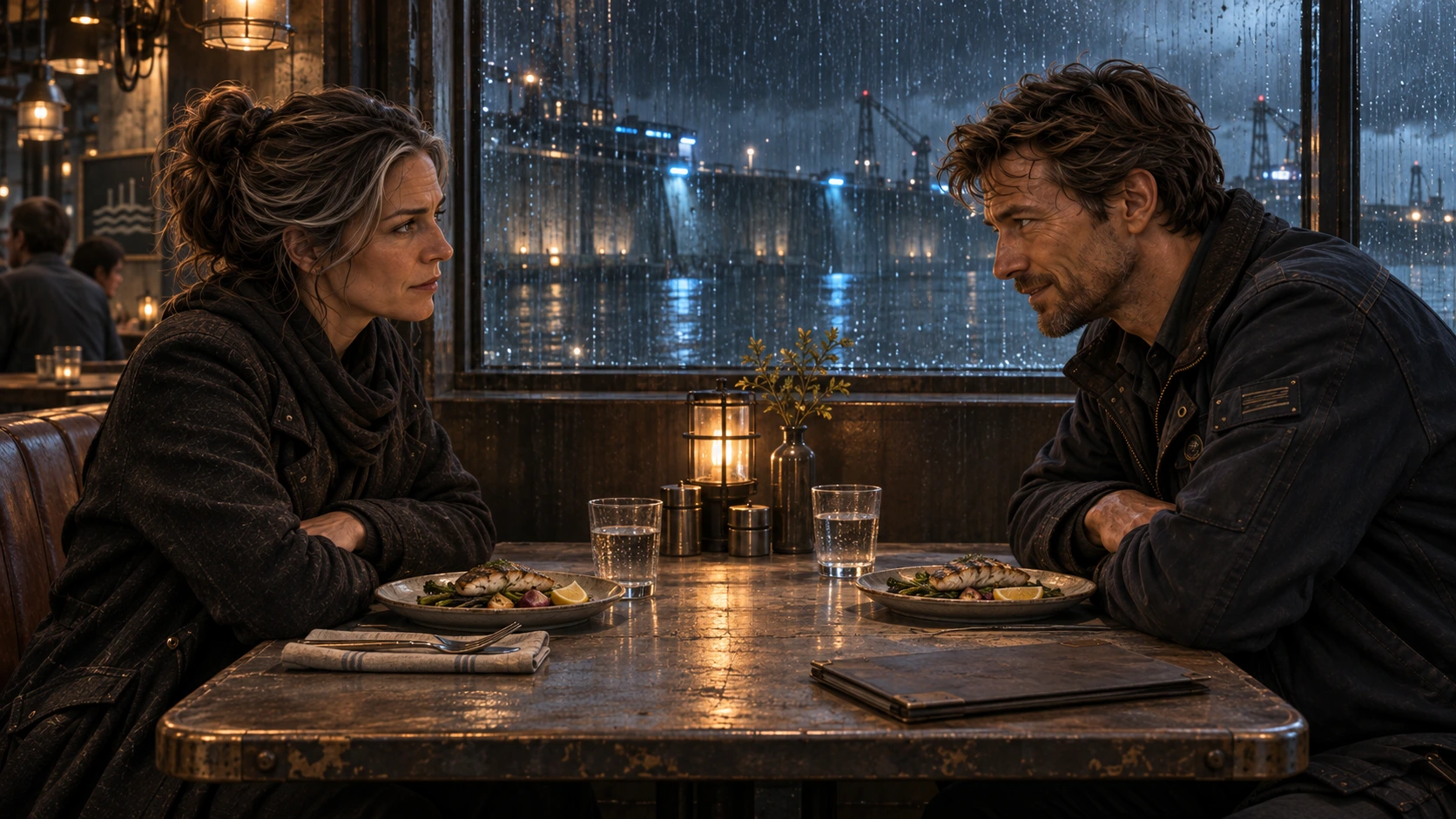
She had once told an intake nurse that their father had gone out for supplies. Nolan had been eleven. He remembered his mother sweating in the front room, Maris with the nurse on the terminal, himself sitting with his back against the outside door so the isolation flag couldn't slide off its hook.
Their father was sitting beside the window. His boots were still on. He had been in those boots since the emergency service had called to explain that the shift change might come too late for someone to get to the house. He had set a cup in front of himself and forgotten to drink it. That was the image Nolan usually recalled from that night. This time he remembered the relief he'd felt when Maris said their father had gone out.
He had been terrified the nurse would ask to speak to the adult in the room and make them show what was there.
When Maris ended the call their father said he was going to check the runoff valve. He offered to take Nolan with him. The valve was on the outside wall. You could see it from where she stood. He made the trip sound long, and Nolan sat wondering how to stand up and go with him without having to look at his sister. The latch took the weight of his back until their father pulled the door open. He went along. He carried the lamp. They had been gone six or seven minutes when their mother died.
For years he'd remembered looking into the shaft and how far down the little lamp shone. There had been rainwater falling through it. He could feel the cold off the walls if he thought about it. He had a clearer memory of the valve than of the last conversation with his mother. He knew which memory he'd practiced.
Maris ate a piece of potato.
“Have you been to the house?” she asked.
“Today?”
“Since we closed it.”
“Why would I go without you?”
“You can go without me. It's on your register.”
He thought of the house filled with places that still knew what a person was for. Cups at shoulder height for their father. Spare dressings on the high shelf where their mother had kept them. A window that a child could open with half the ordinary effort if he first pushed its left corner into the frame. Even if Maris gave him permission, even if he went in and sat there and did nothing for an entire day, the house would still carry on assigning the work.
“Have you?” he asked.
“Twice. I ran the taps.”
He wanted to tell her that he had scattered the ashes. She knew he had. He had sent her the coordinates without a picture. He had spent days deciding whether to show her the star, then sent two numbers a person could enter into a machine.
“Did you want me to come to the house tonight?” he said.
Maris pulled one wet sleeve up a little.
“I wanted to get dinner with you.”
For a while he could hear the rain on the glass. The kitchen served a table with four young kids. One of them insisted on carrying the bowl across the last half meter between the waiter and the table. Her father put his palms on the side of the bowl and let her think about it, then trusted her to carry it. She came very close to spilling it. Her father looked ready to do something and waited.
Nolan set his fork down.
“I'll call him,” he said.
“I'm happy to hear about his work. Whatever he's allowed to show me. I want it to be my request.”
“He'll be embarrassed if I put him off.”
“Will he?”
“Probably I'll be embarrassed.”
“Yes.”
She said it easily. He had been building something deeper and more difficult to say. She seemed willing to end it there if he was.
The repairman answered from a bench where clear plastic drawers had turned the yellow of old teeth. He held up a finger and finished putting a spring back into its recess. Nolan thought perhaps Maris would offer to leave him to it. She sat where she was.
“I'll have a free hour tomorrow after second shift,” the man said.
“That's lucky. I owe you a correction first,” Nolan said.
He could see several ways out. The diagram was delayed. The archive's legal office had put a hold on it. His sister had been sent out of town. All of them would give the man a story about a sailor trying to help in difficult circumstances. It was a pleasant part to play.
“I offered you something I didn't have the right to bring. It's my sister's case. If you're willing to tell her about what you worked on, I'll put you through.”
The man put the spring down.
“What if I already asked the old shift lead?”
“Ask him to disregard it until you hear from the archive. I'm sorry to put it on you.”
He turned the terminal around. Maris supplied her work contact and asked if the man was available to describe the old signal house, its standard feed and any known maintenance changes. He said he could talk broadly about the original layout and probably come in with drawings of the repair bench. He'd never kept a branch diagram. He'd wanted to see one because he'd spent the first half of his apprenticeship wondering where the second cable went. The shift lead had told him the wall was thick and to stop putting his head against it.
Maris smiled. They made an appointment. She asked if he would prefer to speak with the inspector present. He would, he said. There were a couple of things he wanted to ask the inspector, too.
After he disconnected, Nolan could still see his brief surprised expression when she had said there was nothing wrong with an unsigned recollection, provided she could record it as one.
“I'll put him in touch with Oren,” Maris said. “Somebody else can interview him. You've had more contact with him than I'd realized.”
“You can interview him.”
“I can also go home at the end of the day.”
She lifted a spoonful of soup she hadn't ordered. They had reached the point at which the staff set half-portions down wherever someone seemed likely to eat.
“I can tell you what I know either way,” he said.
“I'd appreciate that.”
She moved the folder to the middle of the table. It was thin because she'd brought a few copies and gone to some trouble to remove details from them. The station strip was gray on the scan and the other was cream. She slid them far enough apart that he had to look at each on its own first.
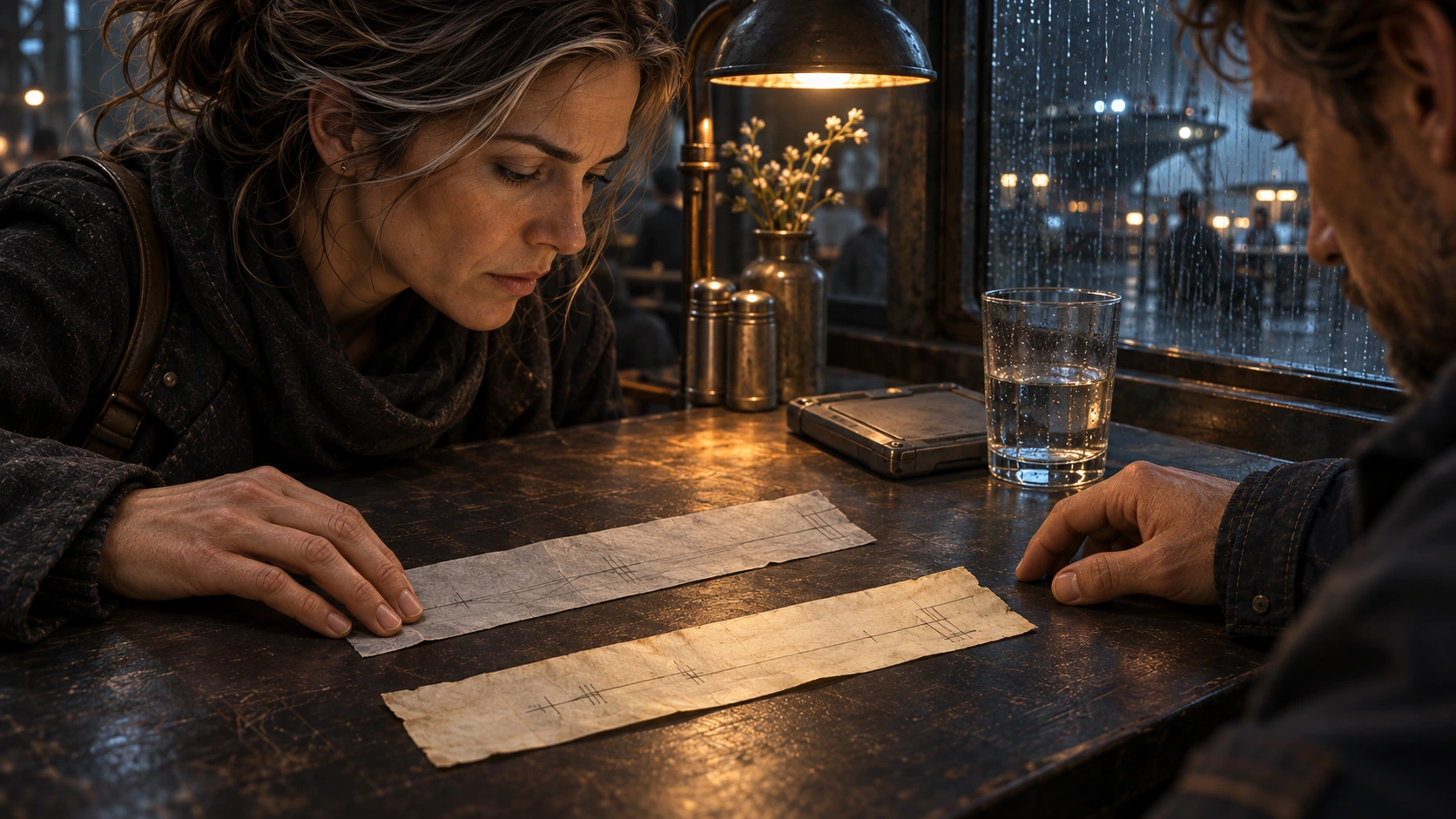
“This one saw the branch. This one saw the door. They preserve different things. Have a look at the space just here.”
He recognized the gap after the third mark. Or he recognized a number of gaps he had seen before, and a desire to have seen this particular one.
“Can I look at those aboard the ship?” he asked.
“You can take those. Tell me what you read them against. I need to know which part of your receiver kept which piece of it. And I need whatever the relay did to it in between, if we know.”
“If you came aboard, I could show you the archive.”
“Which archive?”
He was fresh from telling a man how ownership worked. He had still almost offered the console in the cockpit, with ninety-some departures on it and the calls from the ships he'd passed.
“I have to get access to an old calibration block first,” he said. “I generally purge the working playback after an audit. The untouched copy is sealed on the ship. I'll read it from a bench account and pull the relevant window into a clean copy. If the receiver didn't keep the old block, we might need whoever ran the relay. It might take time.”
“What about everything else the receiver kept?”
“Keep it sealed. I can bring in somebody who has the standing to certify the piece we use. You can verify it without having to take custody of every voice that crossed the ship.”
“You'd let a witness see an extraction?”
“Yes, if they can verify the method and the surrounding window under seal. I can't tell you they'll see a match.”
She lifted her glass, then thought of something and set it down again.
“What about the things you think you remember hearing?”
“I'll tell you before I read the archive.”
“Write it down before you get on the ship.”
He opened a fresh note. For a few minutes they sat at the table while he tried to recover a room many light-years from Argos without furnishing it with anything that had arrived later. He had been in the galley initially. A repeat relay chime had sent him toward the cockpit. He remembered pressing his palm against the back of the pilot's seat and feeling a faint vibration through the upholstery. He had gone back for a mug. He couldn't put the vibration reliably before or after the announcement. He had seen a record indicator on the console. He wrote I noticed the record indicator. Then he added that he had no reliable memory of counting anything at the time.
“That will do for tonight,” Maris said, when he showed her.
He had heard her say it at least twice before in his life, in circumstances he could barely remember. He had always been listening for their father's opinion too.
The storm had passed inland. Out in the street, the shop that rented fins was using a flat shovel to push its carpet of rain toward the gutter. Nolan fetched Maris's coat from the back of the chair. He had forgotten how to help with a coat when the other person meant to put it on herself. He handed it to her without trying.
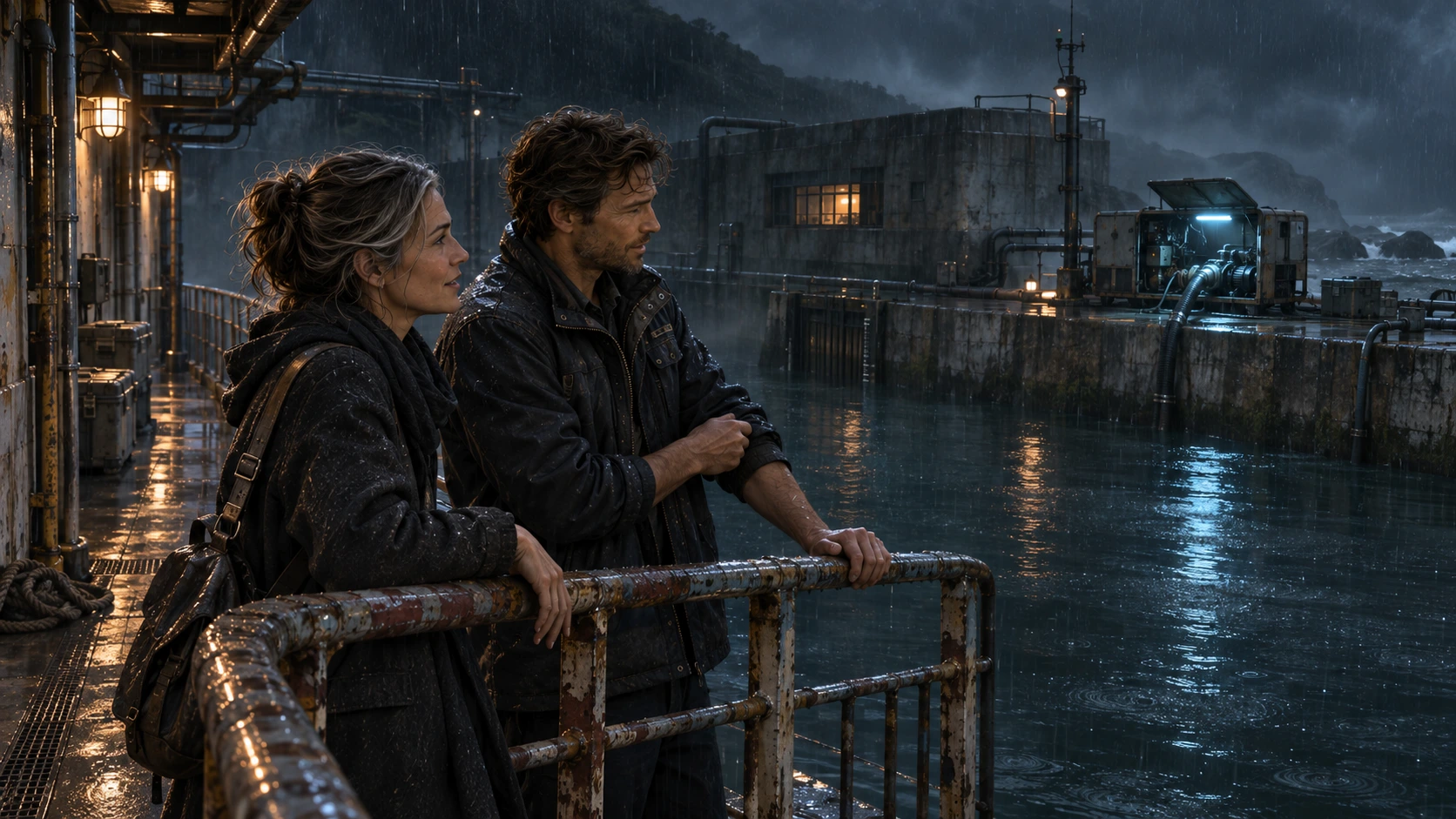
There was a place near the pumps where the pavement widened, with a railing over a channel of lift water. Their mother had brought them to that railing when it was new. It had been painted white then. Nolan remembered putting one eye to a hole along the top and seeing a line of steady afternoon light. He tried it again. There were three more layers of paint and someone had plugged the hole.
“Do you have to get under way tonight?” Maris asked.
“I had the slot after midnight.”
“You keep saying that in the past tense.”
He opened the port booking. The safest departure after the storm was fully subscribed. Someone would take his canceled slot before he got to the end of the street. He looked up and saw Maris had turned toward the water. A portable pump was running on the bank with its panels open. One of its lights kept going out. He spent a moment trying to think of something she and he could do about it.
“I think I'll sleep,” he said. “And look at the archive in the morning.”
She put her fingertips on the rail.
“I'd have answered your question about the star,” she said.
He remembered sending the coordinates at the end of a relay bundle. It had still been light out there. It had taken him a year to decide that a person didn't need to bring everything home.
“I didn't ask you one.”
“I know.”
A pump on the far bank started up in response to a rising gauge. The channel filled slowly, rising through bands of old discoloration on the wall. Nolan tapped the option to give the slot back. The names on the standby list moved up, and the slot disappeared. It was somebody else's night to get out through the weather. He could answer for a few minutes more of his own.
“It was brighter than the instruments said it would be,” he told her. “I thought of you when the light came in.”
Maris moved a few inches along the railing. He made room for her elbow. For a while, he told her about the star.