The Second Copy
An independent record confirms that a signal reached the refuge door during the Deep Blink. Maris has to decide how much of the story she can put her name to.
Captain’s Log: 2734 — Argos
The courier had brought two copies of the receipt and only one pen. He held on to the pen until Maris had signed both.
“People usually tell me one is enough,” he said.
“People usually tell me that after they’ve lost theirs.”
He gave her the yellow copy and went back out into the rain. Through the archive window she watched him tuck his own copy into a pocket under his coat. The envelope he had delivered was sealed in three places. It was smaller than the packet in which she had received the instructions for sealing it.
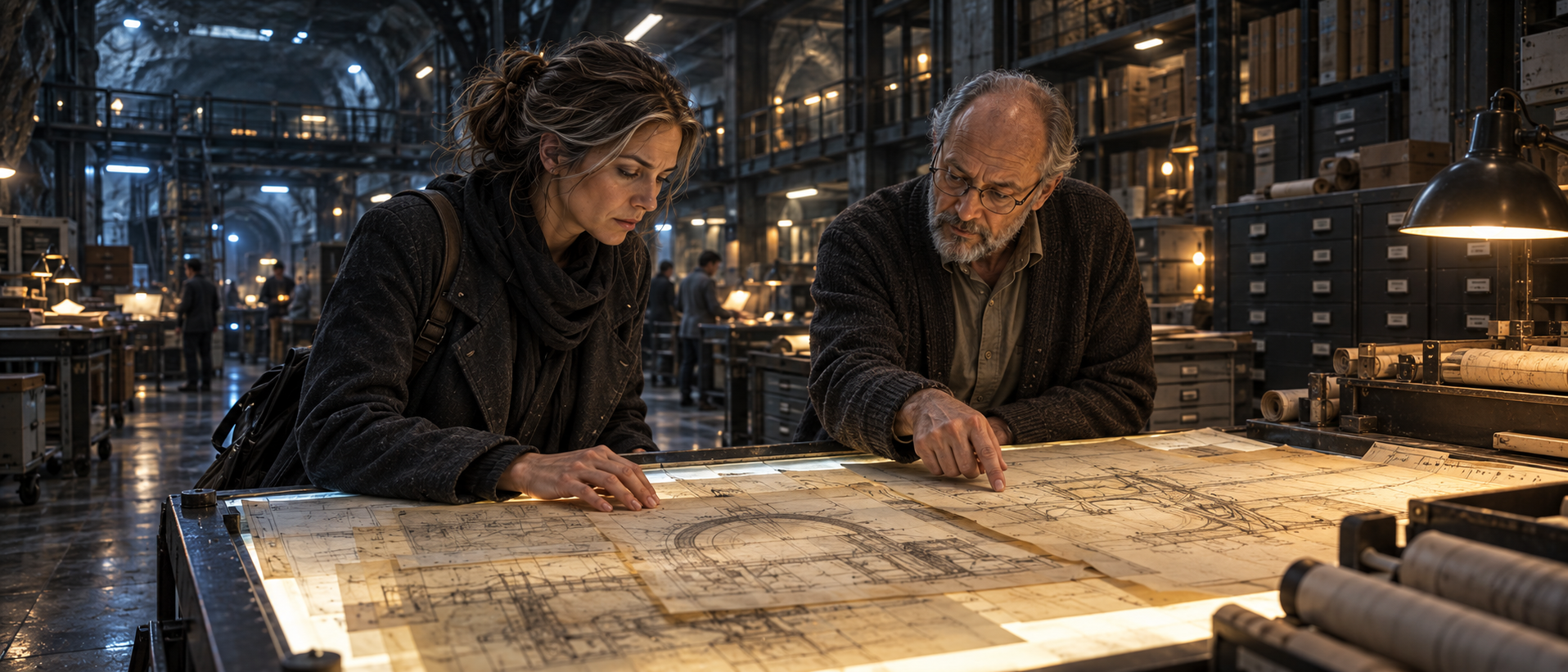
Oren had set aside a table beneath the old plan drawers. He cleared the corner where she laid the envelope.
“Did you tell them what we found?”
“I asked for a time window and a service line. Nothing about the count.”
“Good. Let me open it before you tell me what you want it to say.”
Maris had been about to make exactly that mistake. She fetched a second chair instead.
They started with the strip from the station recorder. Its sleeve still carried the inspector’s initials and the number of the photograph taken before removal. Through the plastic, the fine marks looked like stitches across a hem. The latch trace ran beneath them.
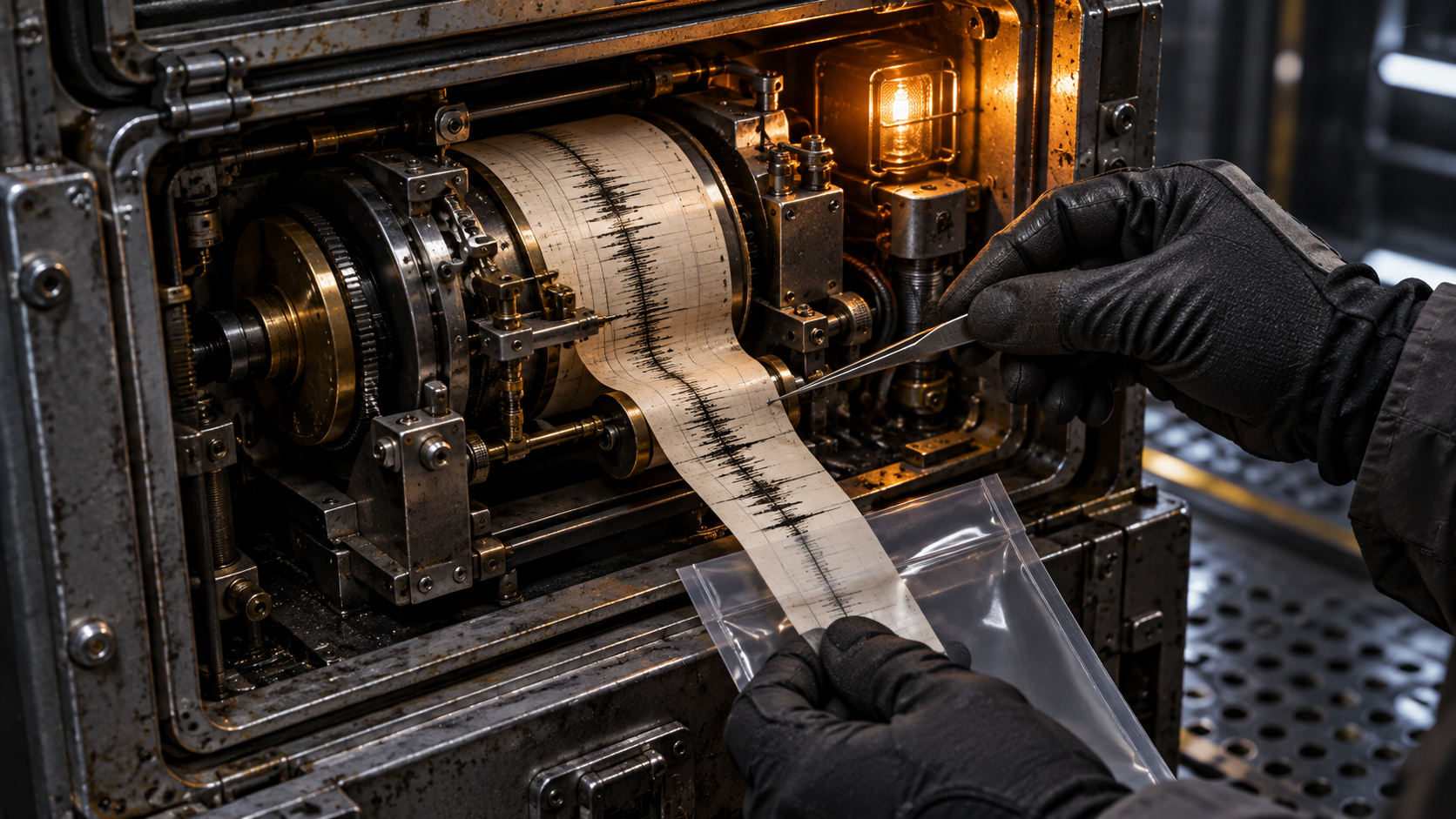
The strip gave them a local input and a local movement. It could not tell them whether the input had traveled any distance to get there. A fault at the terminal could leave a mark. So could a test jumper, or a component at the end of its life making and breaking contact in the cold.
Oren turned the envelope over. The retired service line had a maintenance junction beyond the next station, on a separate supply. When the inspector traced the cable, she had found it still landed there. The junction kept a roll of its own. The contractor had sent a certified copy of the relevant stretch and retained the original.
“Same system,” Maris said.
“Same wire. Different recorder.”
Oren slid the copy toward her. There were eight marks.
She counted again. The last was faint and wide, with a nick through the middle. She wanted very badly to call it a tear in the paper.
“Let’s get the key,” she said.
The contractor had included a circuit drawing and a page of specimen marks from the preceding shift. The wide mark belonged to the hourly health check. The nick was part of the stamp. It appeared twice more in the specimen, at the same interval, on its own lane.
The seven narrow marks were in the lane for the refuge branch. Between the third and fourth was a slightly longer gap than between the others. It was there on the station strip too.
Maris set a ruler along the station record. Her hand was steadier with the ruler in it.
The two clocks disagreed by nearly a minute. Their comparison sheet allowed for an offset, but the station clock had only been measured after the event. They could compare order and spacing more confidently than the time printed above either trace. Within that limit, the two rolls agreed. A signal had reached the door on the service line. One recorder had seen activity on the branch; the other had marked it at the door and recorded the latch cycle alongside it.
She put the ruler down.
“I thought I’d feel better,” she said.
Oren looked at her over the paper.
“You thought we’d find a man with a name badge and a screwdriver.”
“I would have settled for a screwdriver.”
The editor called before they finished the comparison sheet. Maris had asked the local service desk to tell her if the archive published a correction about the route. The desk had sent the request upstairs. Now an editor wanted the story for the afternoon bulletin.
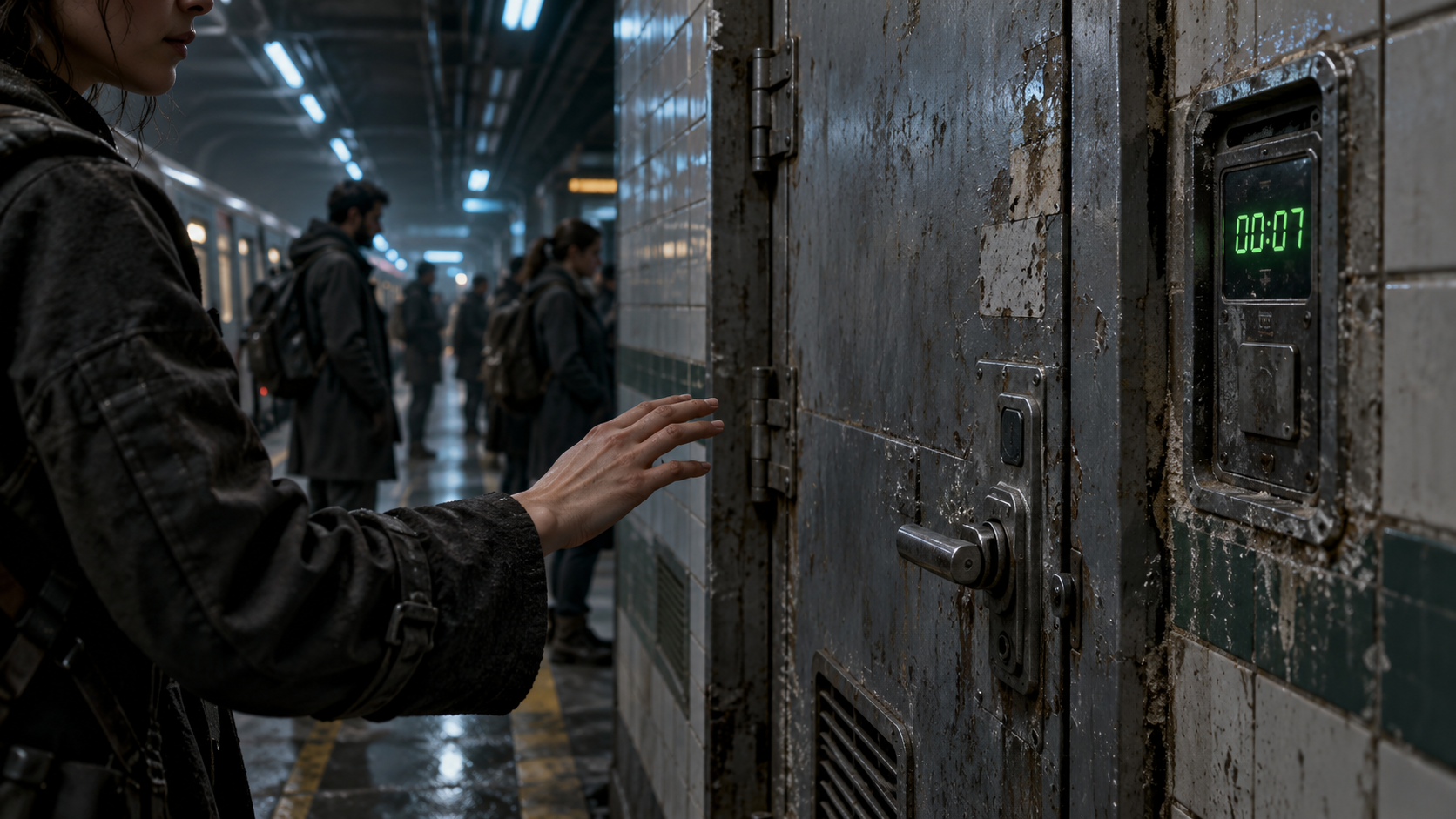
She took the call in the stairwell, out of habit. The door closer hissed behind her. During the Blink, the little green panel on the platform had counted down beside a door everyone was supposed to be able to ignore. She could still remember which hand she had used to take out her terminal.
“We have the original public program,” the editor said. “Nothing in it. And you have records the station didn’t put out.”
“The program is what was sent to the speakers. It isn’t a microphone on the platform.”
“But the official record has been altered. That’s what you’re saying.”
“No. I can show you that the program doesn’t contain what I heard. If someone has a platform recording, I’d like to hear it.”
The editor paused. Behind him someone called out the time until the next bulletin.
“Can you at least say the official version is false?”
“I can tell you where the official recording came from. Then I can tell you what we found on two pieces of paper.”
He said he would need to see whether there was room for that.
Maris could have given him a sentence he would make room for. She had it almost ready. She thought of how many people must have gone home from that platform and tried, unsuccessfully, to explain why a door mattered. A headline would give them something to hand across the table. It would also leave them defending whatever else he put beneath it.
She asked him to send any local recordings directly to the archive. Then she went back to Oren.
They finished the comparison sheet with three columns: what the junction recorded, what the station recorded, and what witnesses reported. Maris kept her own account in the third column. She had heard seven sounds. Nothing on either roll was an audio record. The new copy made a shared event at the door more likely; it did not tell her where the sound came from, or who had put anything on the line.
Oren signed as the person who had opened the envelope. Maris signed as the person who had compared the records. They wrote a short public note with the channel, the clock caveat and an address for firsthand accounts. The technician’s contact details and the refuge residents’ names stayed in the archive.
“What do you want to do with the courier’s receipt?” Oren asked.
She put it in the folder with the envelope. “Keep it.”
There was a relayed message from Nolan in her queue. He had found the water seals he had gone looking for. There was a chance he could bring the comparison he’d offered in person. Had she eaten anywhere lately where the food was worth a docking fee?
She began to answer with the new result. She stopped after the first sentence. There was too much that sounded settled when compressed to fit a relay message.
She told him she had somewhere in mind. She would bring copies.
At the station, the service panel was dark. A man with a shopping trolley opened the refuge door, propped it with his hip and called down the passage for someone to take a bag from him. Maris held the door while he backed through.
“Do you need it shut?” he asked.
“In a minute.”
They waited until a woman came out from the passage to take the bag. Then the man went down to the platform and Maris let the latch catch. She had spent much of the day looking at two records of that small movement. It made a sound she could hear quite plainly from where she stood.
Her train was coming in. She went to meet it.