Where the Stem Remembers
Saul McGrail wants to know whether the garden in Mira was ever tended by human hands. A nursery technician at Harrow Reach begins with what someone did to keep one plant alive.
Captain’s Log: 2734 — Harrow Reach
Saul McGrail wants to know whether the garden in Mira was ever tended by human hands. A nursery technician at Harrow Reach begins with what someone did to keep one plant alive.
The nursery at Harrow Reach had pinned the names of its dead plants to a piece of soft wallboard. Some of the cards gave dates and some gave prices. One bore the imprint of a shoe.
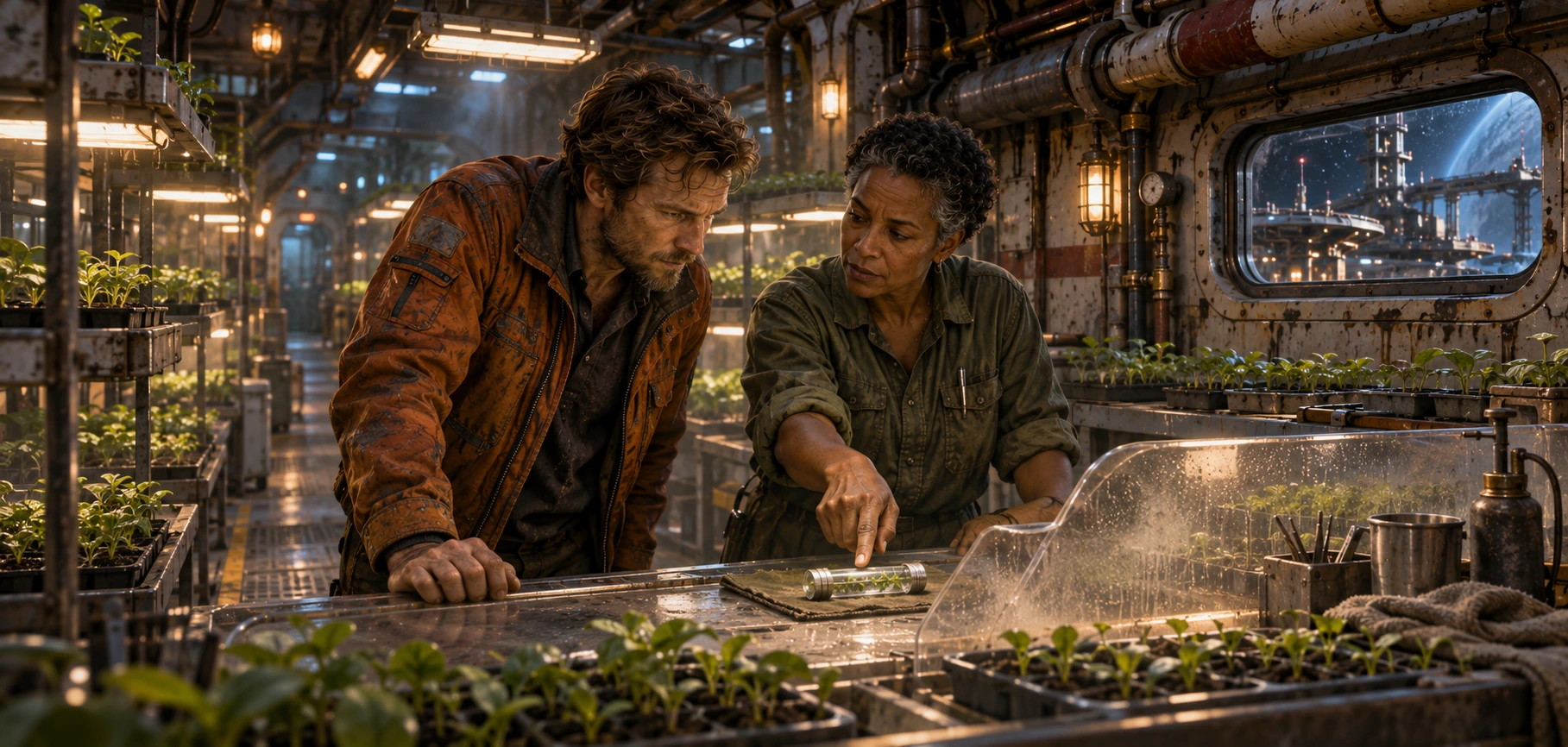
Saul had been told to ask for Mina Kett. At the far end of a row of supports she was taking a thing that looked like cotton out of the grooves in a pump wheel. She drew it out a little at a time, with the patience of someone untangling somebody else's hair.
“Have you brought the specimen into the nursery?” she asked.
“It's in my pocket.”
She put down the pump wheel.
“Then we're going back into the hall.”
In the hall there was a little shipping office with two chairs and a metal worktop. Through a window in the door he could see a poster from one of his own expeditions, protecting the plants from the hard light of a ceiling fixture. The corner with his face had been folded back to let some light through.
“This one's survived a trip,” he said, setting the tube on the worktop. “I wouldn't underestimate it.”
“I was worried about the others.”
She fetched a transparent case, shut the shipping office door, and asked for his inventory. He could remember everything he had done to the fragment on the road. He gave her the inventory from the Traveler anyway. Her payment screen asked whether the laboratory could retain part of the specimen for further examination.
“What if I want it all back?”
“Then I can tell you what it looks like.”
He tried out a smile. Mina had opened his inventory and put the screen flat on the worktop where they could both see it. He authorized retention of a slice and any detached material from its container. As she slipped the tube into isolation, he had the dangerous sense of having arrived at just the right address by accident. The last man he took a find to had spent twenty minutes asking what Saul meant to call it. Saul had answered him for half an hour.
Under magnification the fragment looked worked.
Saul had taken it for a single piece of a narrow leaf with a little stem below it. Around the stem were two raised ridges and a bruise too smooth to have come from his tweezers. Mina said the first ridge looked like healed damage. She turned the tube slowly. The other ridge wrapped around and ended in a hook.
“Something doesn't match at the hook,” she said.
Saul bent to look. At the first ridge the surface had the green-brown cast of a cellar apple. Above the second it was grey where the light went through. Near the hook a black strand crossed beneath both colors and broke.
“Root hair?” he asked.
“Let's see.”
In the detached material she found another black strand, followed it, and got the end free. When she relaxed the grips it sprang halfway back to its original shape. She gave him a better view of the braid.
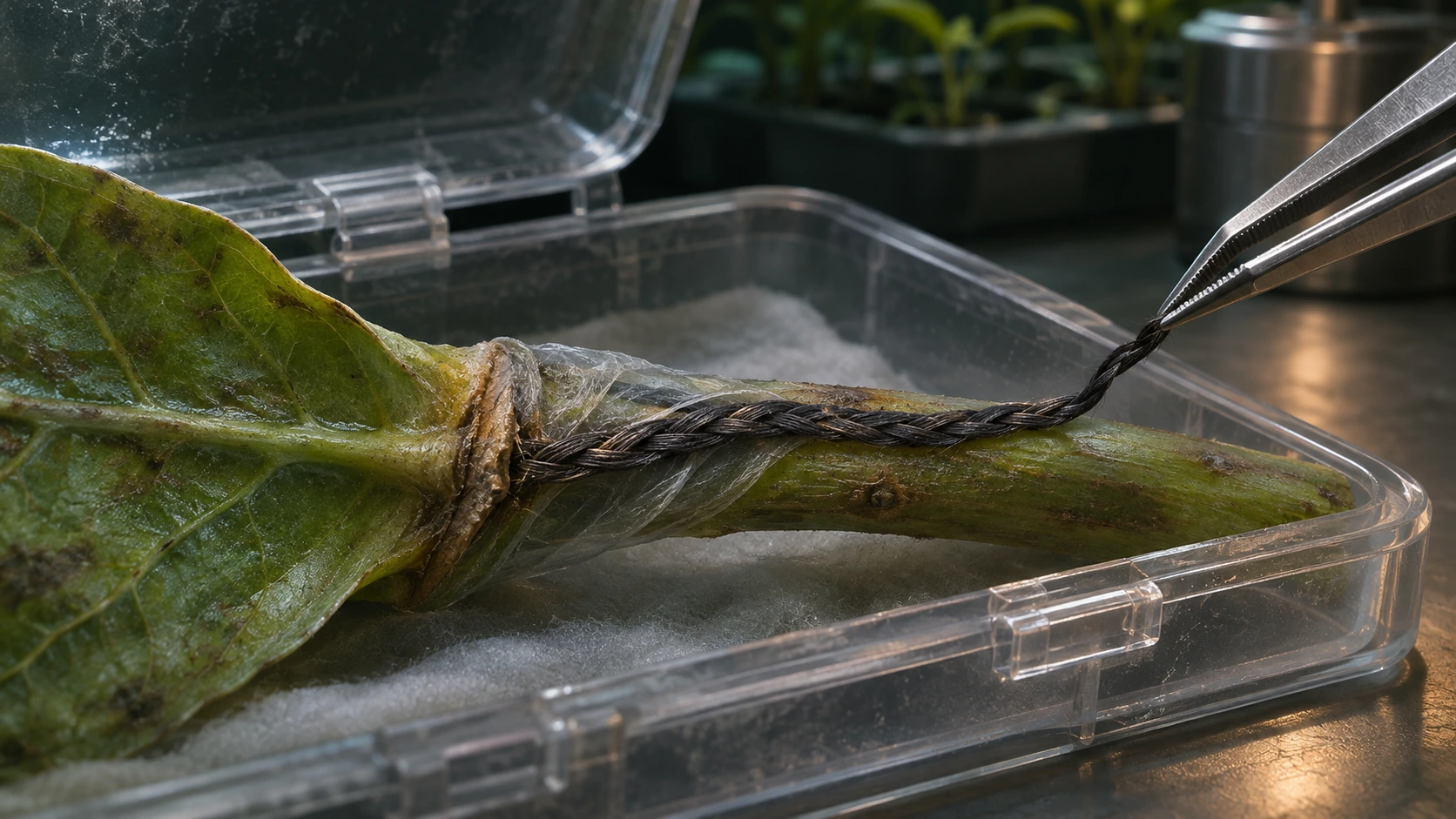
“Binding. This is something you can leave in a mature graft. It won’t come undone on its own.”
“So someone grafted it.”
“Or trained it against a support at that spot. A piece this small answers fewer questions than either of us can ask it.” She marked two places on the image. “The tissue at this line belongs to different stock. We can establish that with the slice, under the permit you just signed. I want to see what's on the other side of the swelling.”
He had imagined a black ring growing from every starward stem in the seven rows. Mina wanted to look under a swelling. She had the rare power of making him feel that the swelling might be enough.
He offered to show her his first film of the bed. She accepted and asked when he'd last seen it himself. He'd put it away after he cut together three minutes for his accounts. The longer version started with his lamp looking for a place to land. Then the surface lurched left. Saul heard his own short bark of panic and felt the toe of one boot strike the underside of the worktop.
Mina widened the frame.
“Is this before you took fluid?”
“Don't worry about the fall.”
“I'm not worried about the fall. I want to see where your boot was.”
The next light to come into view shone along the outer membrane. Under it, above the lip he had caught, a row of supports stood like small poles with their feet buried at uneven depths. The first ones were long and pale. Replacements at one end had pointed tops. Along a different row the poles had disappeared into the growth and there were only their little white shadows.
“On this pass,” she said, moving the time back, “it's easier to see what they did with the old stands. They cut them low, grew around them, then put in the replacements.”
He had come to ask who could do those things. She had found a sequence of work, with the later work done through the earlier. He remembered how much heat he'd lost changing a hose on Mira. He began to imagine what it cost to take out an old stand and how you might postpone the work twice, and then do something else that made it unnecessary.
“Can we say how many people?”
“I can show you three different shop practices. That could be three people or one very old gardener. The point where the supports change from wedges to clips might give you a line to follow in other gardens.”
She made a duplicate of the relevant frames with positions and lighting information. He approved the copy. The first time she asked him if he wanted his voice removed, he said no. A moment later he asked if he could keep a clean version as well.
Hessa Val could find a vessel's owner from the way its people ordered coffee. She told Saul the man who'd been in to ask for him drank it on the move and had a hand inside his coat holding the coat shut. He was waiting by the depot seam, where the newer pressure shell passed through the old and every third sound came back from a different direction.
Saul found a woman there instead. She took a thin cargo ticket from the man in the coat and introduced herself as Sabeth Drawe, a solicitor for Wiseman Inc. The man had been carrying her order for coffee.
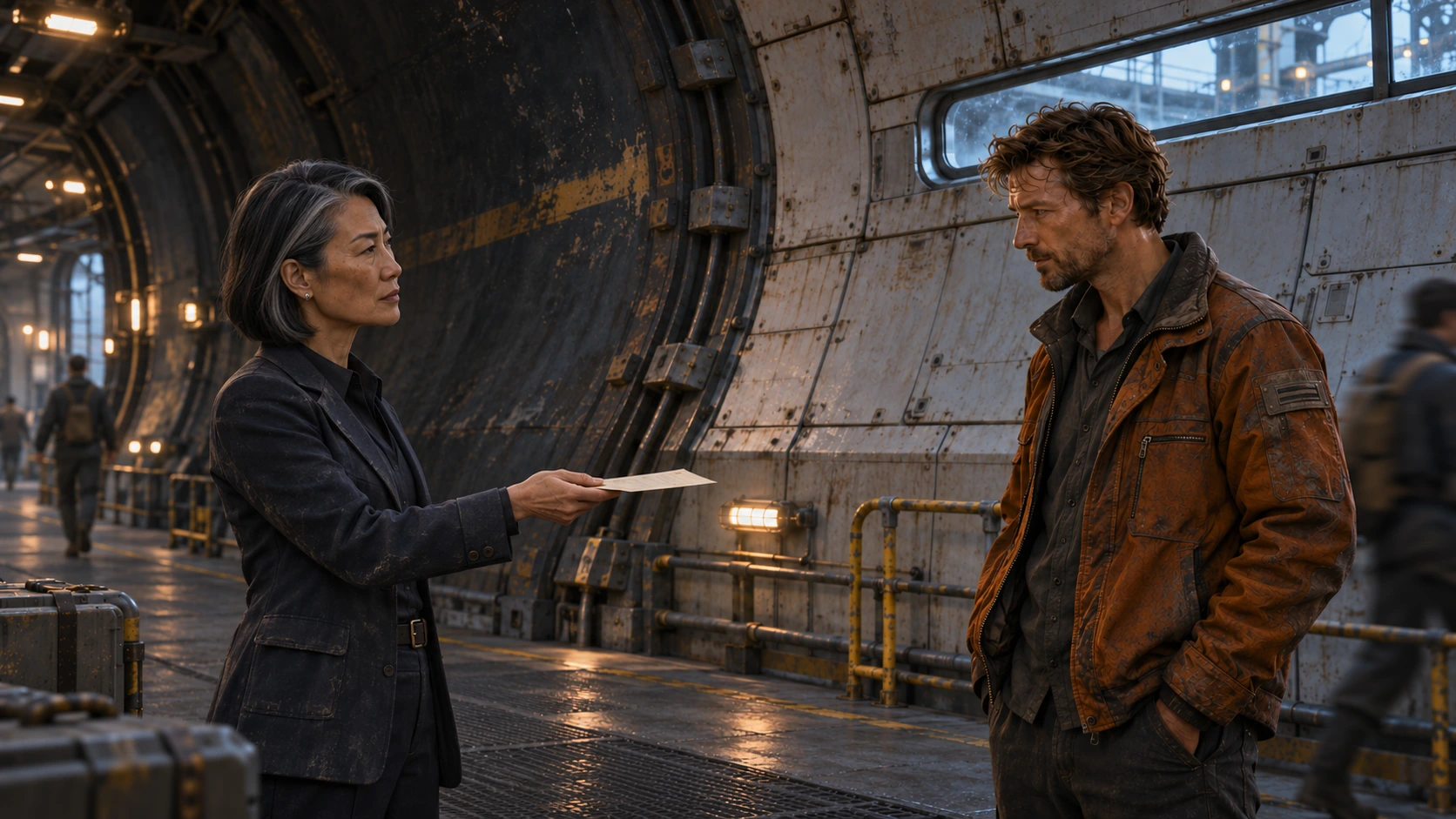
“Is this a contract for a story?” Saul asked.
“If one develops.”
He waited for her to look pleased at the joke. She let him wait.
Wiseman would like to settle the balance remaining on his recent assistance claim. In exchange it would want a representative of the ship present at a routine inventory. The name of the rescue provider was in small type. Saul had passed it without looking on every occasion he'd opened the bill.
“An Argonaut reserve boat got me clear of the dust,” he said.
“It was launched by a supporting carrier.”
“You put in part of the fuel.”
“We put the boat in range,” she said. “Stations live on someone being willing to put a boat in range.”
She made him the usual offer to zero the invoice and purchase coordinates pertinent to the claim. The alternate offer, in which he kept his rights and paid, would cost him the overhaul of the Traveler's filtration bed. On his way into Harrow he'd smelled a little sweet residue where the airflow came up behind the seat. Newly refit ship, cupboards washed, last passage still in the walls.
“What does somebody do with coordinates in your system once you have them?” he asked.
“Depends who's taking an interest. Sometimes we check them against a schedule and learn where to put the next boat.”
Sabeth let him open the procedure for himself. The form he had seen in the past was essentially the same. There was now a paragraph acknowledging additional inherited recovery rights in safeguarded equipment. The form made no assertion about where such equipment might be. If there was equipment, he would be asked to disclose enough for the company to protect any valid interests.
He stopped at that expression, valid interests. A man had once used it on a recorded call explaining why a foundering cutter would have to wait for a chartered rescue boat to disembark charter equipment. Saul had known the caller far less well than he'd known Renn, a mechanic on the cutter. Renn had sold him a used transit coil and offered to fit it for free provided neither of them was called a genius when they got it going.
On the day he lost Renn, Saul had been awaiting room on a different boat. He'd already spent a long time answering a question about which ship was his. A recorder held him saying mine when the rescue scheduler suggested shifting their one working tender. His own crew was aboard that ship. Renn was aboard the cutter, which had lost heat before their order changed. There had been other reasons for the scheduler to choose Saul's berth. He had spent years revising what he would have said if she hadn't.
From the depot seam he could smell lunch cooking below the deck. A lift warm from the galley gave him a little of that air and shut. He gave Sabeth back the form. On his own terminal he asked for the unsubsidized installment rate.
“I can't offer it again if you change your mind,” she said.
“Send me the papers without the discount.”
She left him a contact address that put questions through to a private desk. He'd had trouble getting a reply from that same desk twelve years earlier. One of Darius Meister's assistants had told him, very politely, that rescue records were the property of the charterer. At the time he had thought he could tell the story anyway and eventually find out what happened. Now he was standing in the seam at Harrow waiting to see which three words he'd put in the subject line.
The difference Mina had wanted to check was a second graft.
She took him through the detail on the screen. The braiding at the first seam had an ordinary protective gel around it, cured into the stem. Lower down there were shallow punctures where she expected a paired collar, the sort of thing she remembered her aunt using over a field bench because collars were cheaper to salvage than to buy. At first Mina had assumed damage. Then she found the ghost of a pair in the film. The cut that allowed the newest tissue to grow crossed the old damage. They could say which came first.
“Paired collars went out of print before I served my time,” she said. “My aunt still made them. Somebody fixing a lot of plants would get tired of that after the first year.”
“Which means what? They couldn't get new clips?”
“I had a whole wall made for the old ones. It took me six years to admit I'd built the wall for my aunt, and another year to take it down.”
Then she showed him a place where the modern weave had been pushed through an old mounting band rather than attached to a new part. He was the one who recognized the reuse. He asked whether thrifty gardening looked the same everywhere. Mina said it often did and that was one reason he'd need a bigger comparison.
An apprentice came to the door with the wrong size of wick and waited. Mina told her where to return it. The apprentice said the barge they'd had it from was selling its stock in lots and the good one had gone. Mina shut her eyes briefly. Then she asked how much longer the spare could last and listened to the whole answer.
While she finished, Saul looked around the shipping office. A bright green bottle with somebody’s name written on it stood beside the window. Beyond, the plants carried old food labels with new names added, sometimes in the same hand, through sheets of fading color. The isolation case had three places for tubes. Mina had filled one with distilled water so she could see the effect of the storage light on a blank. There was room for something else.
“Would you take a living sample if we can lawfully get one?” he asked.
“If you can demonstrate that someone can spare it. People say they rescued plants when what they mean is they dug them up faster than anyone could tell them to stop.”
“I'm asking about something already off the bed.”
“Something you believed was off the bed. It's good you said exactly where you found it.”
Mina put a droplet from the existing sample on a prepared slide and asked him to hold the sheet steady while she adjusted the focus. A thin portion of the fragment had responded to light and then to dark. It maintained a faint pressure difference as the room warmed. Both signs were encouraging. She would need days to say whether cells were surviving transport or simply slow to give up. He asked if she intended to keep it beyond that.
“Depends on your permit.”
“What permit would you write?”
The nursery stocked blight-resistant greens for three depots and sold seedlings from another row to whichever liners bought in bulk. Mina was on notice to report all new stock to a purchasing cooperative. There was a form allowing unpriced care and preservation with a joint owner where sale was not yet authorized. It meant she could make a copy of any growth that could survive on its own. He could not come back in two weeks, sell the source sample to the first ship that asked for it, and demand she destroy the copy.
When she explained this, Saul thought first of what he would do if her purchaser wanted all of it. He asked for a condition forbidding sale without mutual consent, and half the price of the room should his share go unfunded. Mina said there was little use asking her to authorize a sale if she thought the specimen ought to stay alive. He asked her to put that in too.
She took him through a provisional custody receipt, in which he entered as the collector and Mina as a custodian with authority independent of his. On the acknowledgment he started typing McGrail cutting. He removed the word he had added and wrote Mira fragment, loose within service channel. When Mina reached for the screen he held it down a moment longer so he could include the cuff abrasion on the tube he'd put it in. She signed beneath the abrasion.
He took his oldest spare route log out of a canvas bag in the Traveler. Renn's name was on the paper backing of a coil label. A decade of attempted contacts followed it, then an invoice in which a Wiseman company accepted the last cost of fishing the cutter out and denied he had standing to see the watch orders. The final payment notice contained a contracted transfer tag. He had never minded saying the name of the company when he was asked about the rescue. He'd never said his own name in the part of the story that left no room for Renn.
He put the new form alongside the old notice. The same transfer tag appeared on both, now in a shaded line for records migration. Sabeth's new form had other references around it. He could not say what the recurrence meant or whether there was a usual number everybody assigned work that had to be done again. He could put both papers before someone who knew what a transfer tag was and compare the instructions he'd actually been asked to accept.
Before there was anybody else to tell, he took the copies to Mina. She would be asked if he arrived with an agent asking for joint custody. She waited while he ran through the explanation twice and then asked why he thought she would need the old invoice as well as the new one.
“It was part of a rescue schedule I helped change,” he told her. “I have never seen the orders.”
The flickering green of the hold lamp was visible through the window. A dock worker carried two small replacement plants to the next shell, an upright in each hand. Mina let the records pause on the bench while the worker came back.
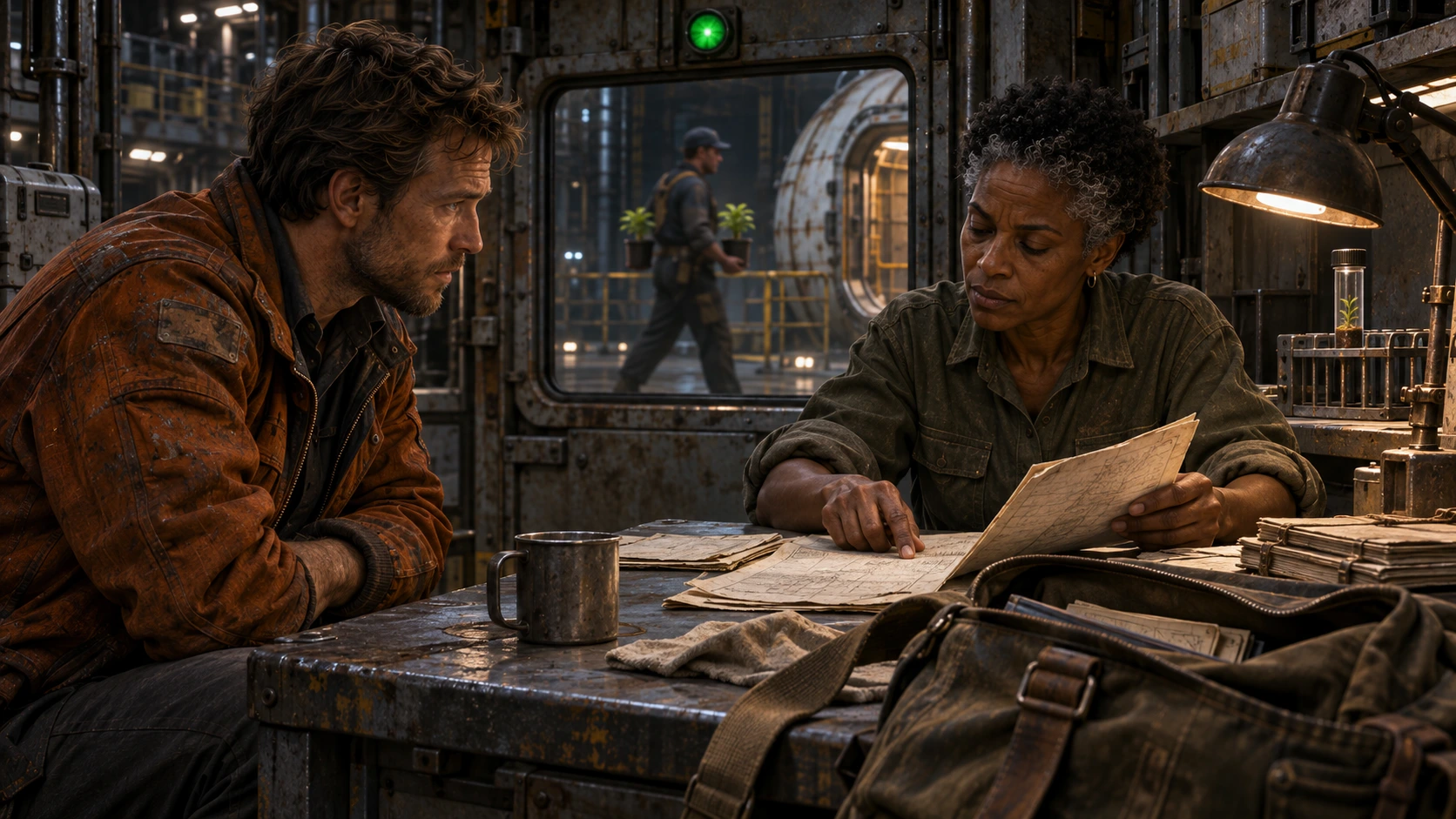
“I'll keep a copy,” she said. “You'll have to ask for the schedule under your name.”
He waited while she copied the pages, and then used the address Sabeth had given him to request a comparison of the old orders with the new contract language. He didn't say he had a cutting that might live. He said he was a person who had been brought home and had given evidence at the time. He put his name underneath before he could think what a collector would have said instead.