
The First Stroke
Deep beneath Revelation, Ripley Lorde waits for the machinery to stop. A restart should require his permission. The first movement comes without it.

Captain’s Log: 2734 — Revelation
Deep beneath Revelation, Ripley Lorde waits for the machinery to stop. A restart should require his permission. The first movement comes without it.
The last piston stopped with its lower collar a hand’s breadth above the inspection marks.
Ripley watched until the gap ceased narrowing. Only then did he step onto the service bridge.
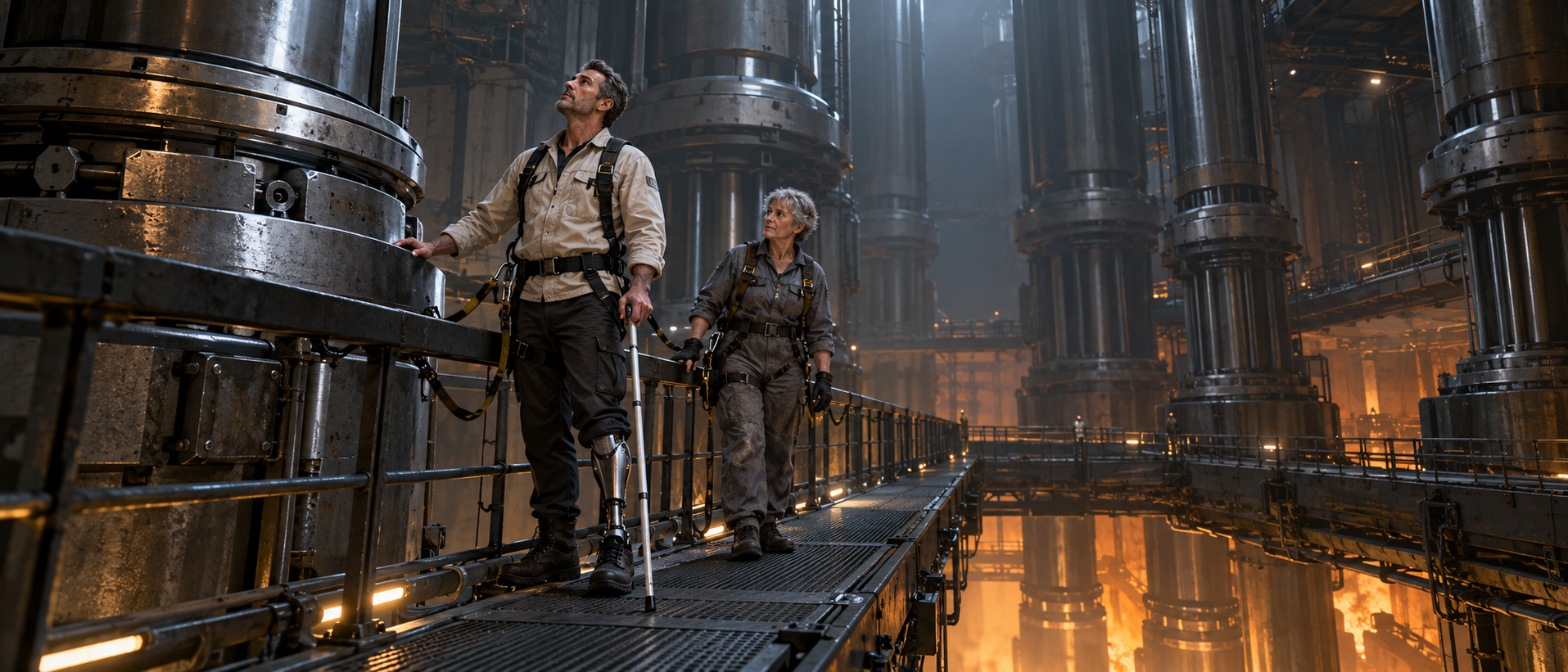
Nine hundred great columns stood around him, holding the work of Revelation in suspension. Heat rose through the grating. Without the usual concussion of the machinery, he could hear a small piece of metal cooling somewhere high above him.
He liked this part of the Deep Blink. The waiting made the scale of his accomplishment available to him. For the rest of the year, it was difficult to admire something that could kill you for standing in the wrong place.
Behind him, a gate clicked.
“Bridge stays closed,” said Iona Venn.
“To visitors.”
“To anyone without a second person on watch.”
Ripley turned. The shift keeper had clipped her safety line to the outer rail and was looking at his empty harness ring.
He lifted his white cane.
“I have several excellent methods of catching myself.”
“You can demonstrate them after you clip in.”
He did. She waited to hear the catch engage before opening the gate fully.
Iona had been on this floor longer than Ripley had been Crown Foreman. Her left sleeve carried three repairs in three shades of grey. He had once offered to have it replaced. She had told him the rest of it worked.
“Is the east gallery clear?” he asked.
“Clear and signed.”
“Residual pressure?”
“Within limits.”
“Then we have a quiet evening.”
Iona looked up through the columns.
“That’s what I put in for.”
They walked to the central inspection point. His synthetic left foot found the grating with a harder note than his right. In the absence of the engines, it seemed indecently loud.
On the other side of the rail hung a brass plate, dark with generations of heat. Every crew that rebuilt the bridge removed it first and replaced it last. The lettering listed those lost in an early vent failure. Several surnames survived on the present shift roster.
Ripley knew the plate by sight. Iona touched its edge as she passed.
At the command pedestal he opened the restart cover. Beneath it waited the physical authorization lever. The old arrangement had survived three generations of control systems: receive clearance, release the local interlock, admit pressure. A person had to stand here and mean it.
He checked the clocks. The memorial interval was still running.
Up on the gallery, a young fitter settled a tool bag beside his boots.
“No work during the hold,” Iona called.
“Just putting it down.”
“Put yourself down with it.”
The fitter sat.
Ripley smiled. Then, through the sole of his natural foot, he felt a small vibration.
He waited for the second.
It came a moment later, faint enough that he might have ignored it with the engines running. The cane’s tip rattled against the grating.
Iona had stopped beside the pedestal.
“You feel that?” he asked.
“Yes.”
He checked the pressure gauges. No change. He put a hand on the rail.
A third tremor passed through it.
“Gallery,” Iona said. “Stay where you are.”
Above them, the fitter was already standing.
The next vibrations came close together. Ripley counted without intending to. On the seventh, the collar of the nearest piston dropped.
It moved scarcely two fingers’ width.
The noise was enormous.
The fitter lurched against his safety line. His tool bag slid, struck the lip of the walkway, and spilled a wrench through the rail. It fell past Ripley and vanished below.
Iona seized his arm.
“Off the bridge.”
“The inlet is closed.”
“Off.”
Ripley looked at the lever beneath its open cover. He had not touched it.
A bead of fresh hydraulic fluid formed on the piston collar and lengthened.
He went with her.
At the outer station, Iona locked the bridge gate and called for the gallery to be cleared. Ripley brought up the movement trace on a battery inspection unit.
According to the main controls, nothing had happened.
The fitter arrived white around the mouth, carrying the torn tool bag. He set it down gently, as though the missing wrench had made the remainder fragile.
“Did I do something?”
“No,” Ripley said.
“I was next to the service panel.”
“You did nothing.”
Iona handed him a seat restraint. His fingers took two attempts to close it.
Ripley enlarged the pressure trace. A minor disturbance appeared in a line the modern monitoring package barely sampled. The local accumulator. Enough stored energy to move a released assembly a short distance, even with the geothermal inlet shut.
Possible, then. Dangerous, but possible.
“The holding dog,” he said. “If it withdrew—”
“It shouldn’t.”
“I know.”
“Then write that before you explain it away.”
He looked up at her.
Iona was watching the great piston through the gate. Her jaw moved once. He remembered that her uncle’s surname was on the brass plate.
“I’m explaining the energy,” he said more quietly. “Not granting permission.”
On the general channel, an operations supervisor requested a revised restart time. Housing heat stores were sufficient for the scheduled hold; extending it would begin to inconvenience people. A fabrication client had a vessel waiting.
“Twenty minutes,” Ripley began.
Iona turned to him.
He stopped.
He could have diagnosed a sticking mechanical latch in twenty minutes. He could not yet say why this one had released while every modern record insisted it remained engaged.
“Indefinite hold on this chamber,” he corrected. “Use the other circuits under their existing limits. No compensating overload.”
The supervisor asked whether that instruction came from the Crown Foreman.
“Yes,” Ripley said. “You may enjoy spelling it out.”
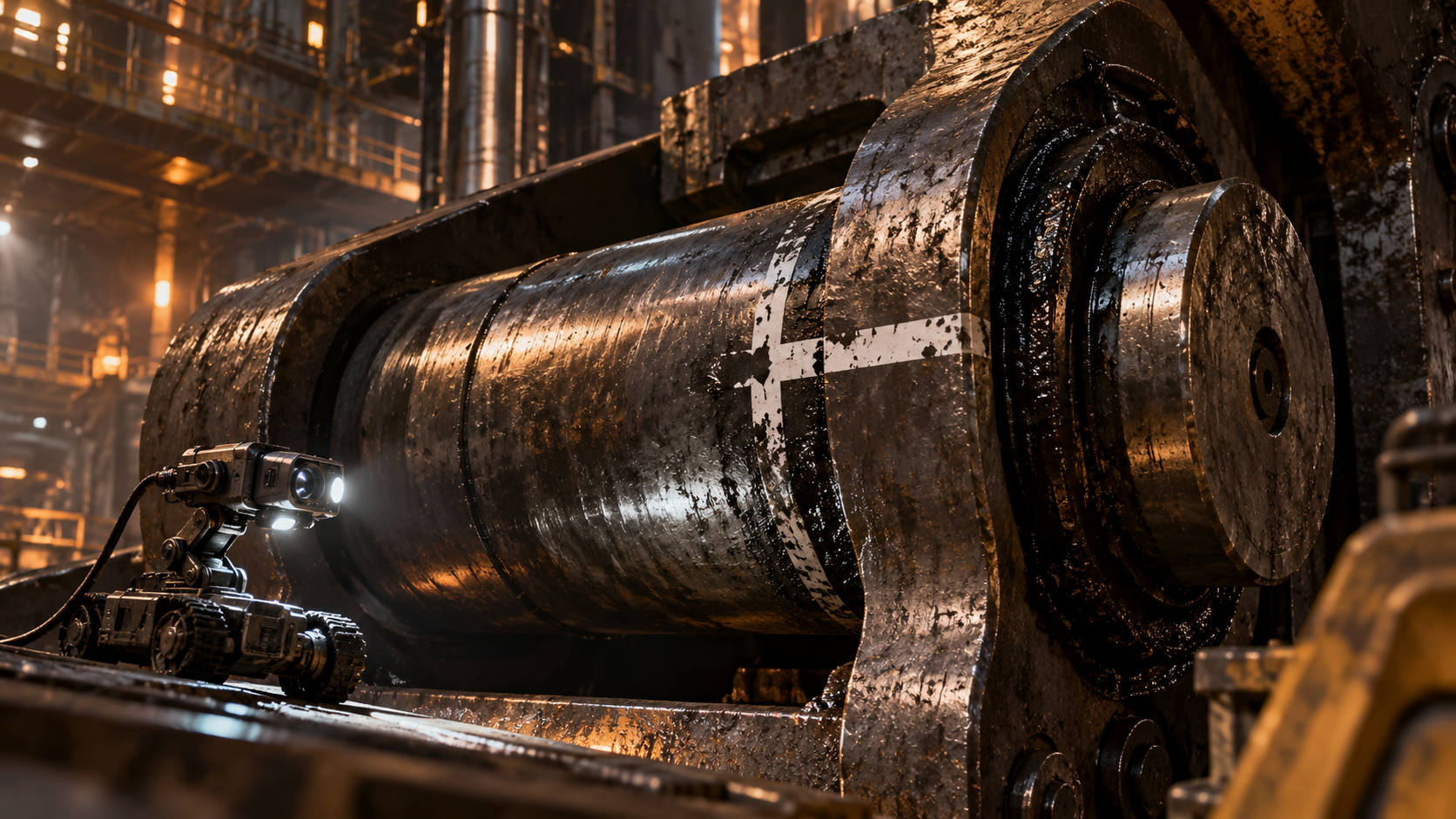
They sent an inspection crawler across first.
On its camera, the lower locking assembly looked old and ordinary. Blackened steel, grease, witness paint. The paint had broken cleanly across the retracting pin.
A physical release. Not a faulty position sensor.
Behind the assembly was a secondary control box. Ripley recognized its housing from drawings copied into an archive before he was born. The newer controls supervised it. They had never replaced it.
“Can you read the seal?” he asked.
The crawler moved closer.
A maintenance wire held the box shut. Its lead tag was intact. Whoever last inspected the mechanism had pressed a mark into it by hand.
Iona fetched a paper fault sheet.
“The system’s available again,” Ripley said automatically.
She placed the sheet on the desk between them.
“The system says the piston stayed put.”
For a moment he disliked her intensely. It passed.
He described the movement, the accumulator pressure, the broken witness paint. Under initiating command, he wrote not established. Iona countersigned as witness. He asked the fitter to add his account without looking at theirs.
The boy hesitated over his lost tool.
“I’ll pay for it.”
“No,” Ripley said. “You’ll have a replacement before your next shift.”
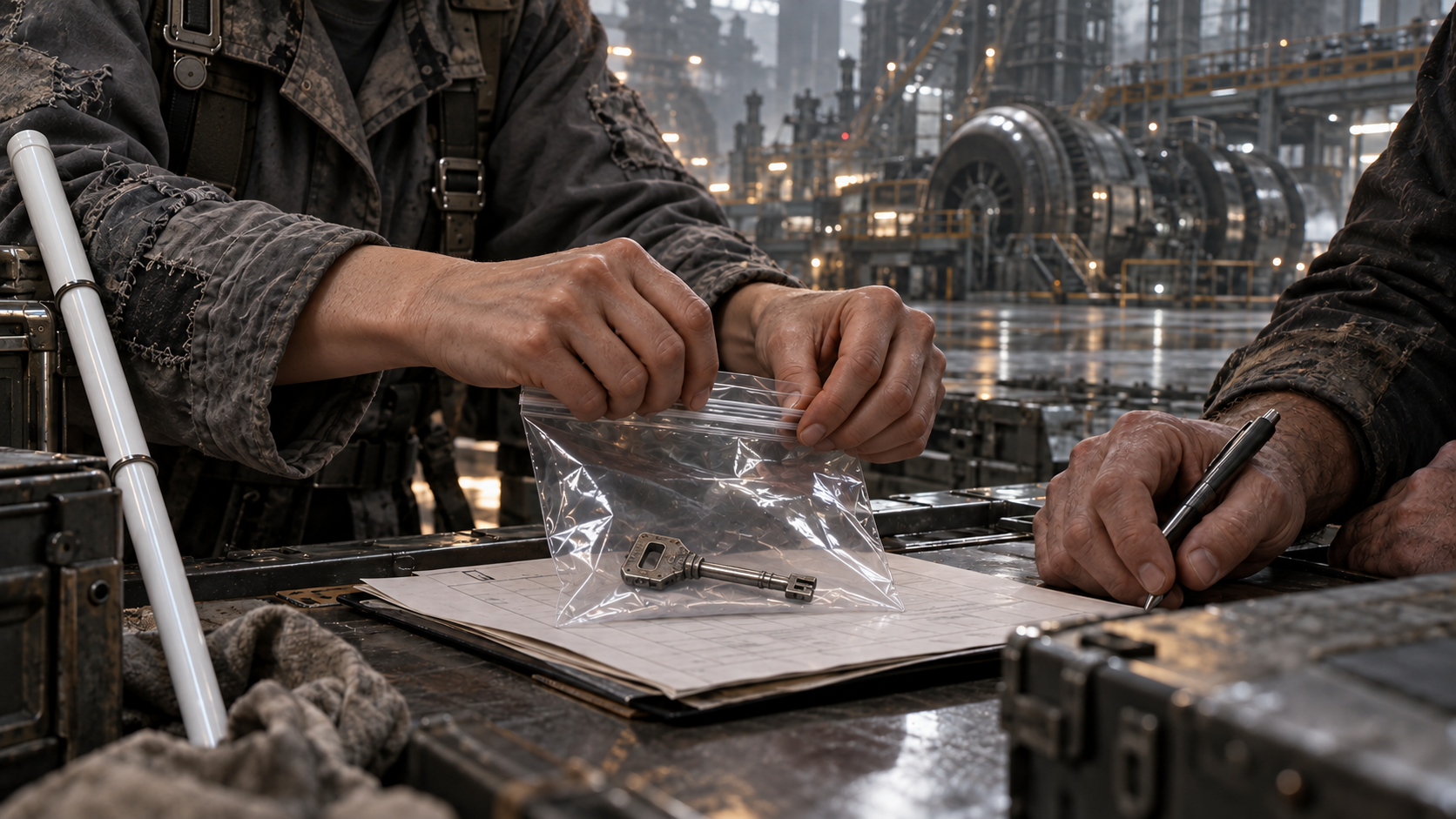
He took the command key from his pocket and set it on the fault sheet. An object everyone had seen him keep, throughout an event that should have required its use.
Beyond the gate, the columns remained still.
Iona covered the key with a clear evidence bag and wrote the time across it. Ripley watched her seal it, then moved his chair aside so she could finish the report.