
Old Brass
A worn brass component gives Ripley a repair he can test. Iona insists they keep a second question open: what asked the machine to move?

Captain’s Log: 2734 — Revelation
Iona put the small brass piece on a cloth and waited for Ripley to call it obsolete.
He disappointed her.
“That's beautifully made.”
“It was made to be replaced.”
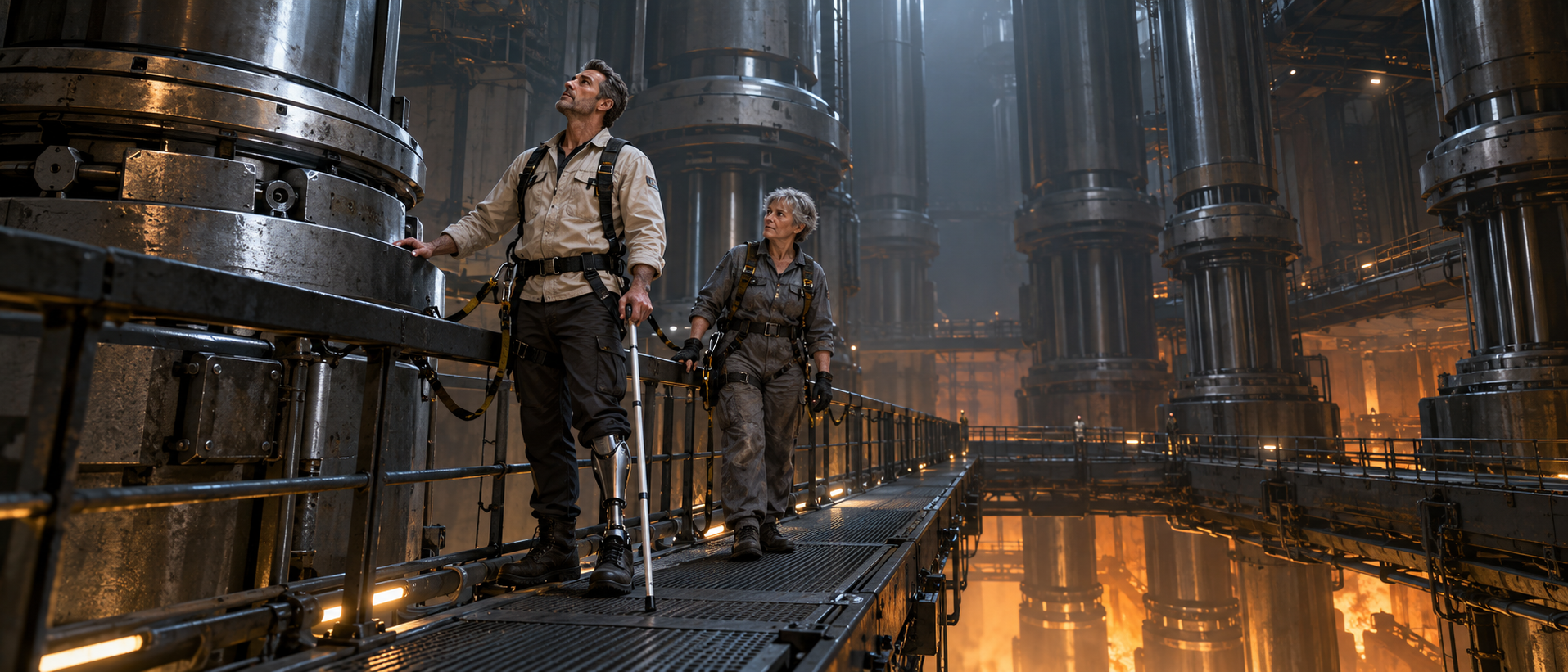
The workshop belonged to the shift, which meant that nothing stayed on a clear surface long enough to acquire dignity. Beside the cloth lay a mug, three gauges awaiting calibration and the young fitter's replacement tool bag. Beyond the wall, the unaffected circuits worked within the limits Ripley had specified. Their slower rhythm had become an accusation he could feel through his synthetic left foot.
The affected chamber remained isolated.
“What does it replace?” he asked.
Iona set down a second piece. Its working edge had worn to a shallow curve.
“That.”
The crawler's photographs showed the holding mechanism before anyone disturbed it: broken witness paint across the retracting pin, an intact maintenance seal behind it. Ripley had examined the images until he could see the assembly when he closed his eyes.
Iona laid a drawing beside them. The old paper had been copied from an older sheet; one corner carried a note in handwriting neither of them recognized.
“You found the service kit.”
“A fitter found it. I asked which cupboard.”
Ripley turned the worn piece under the lamp. It belonged to a mechanical permissive, a small part of the chain between a release command and the holding dog. He had seen its outline in the archive model. The model rendered the engagement as a clean line.
The real contact face had a history.
“Wear could let it ride past,” he said.
“Could,” Iona agreed. “We haven't tested it.”
He glanced up. She had not said it to defeat him. That was becoming harder to remember when he was tired.
They called the fitter over. He came with his hands carefully empty.
Nothing on the bench could move a piston.
They verified that before connecting the test rig: the removed assembly carried a dummy load; its pressure supply was separate; the chamber's mechanical supports, isolation and drained accumulator remained checked under the shift's procedure. Iona read the confirmations aloud. Ripley repeated them back instead of pointing at the signatures.
The fitter adjusted a lamp to show the contact face.
First they tested the modern release path with the local authorization withheld. The indicator changed. The mechanism did not release.
Then they applied the bounded service input described on the old drawing. Ripley watched the worn surface climb where it should have held.
The dummy load dropped into its catch.
It made a small sound. All three of them flinched.
For a moment Ripley saw the collar falling again, heard the wrench strike once on its way into the dark.
The fitter looked at his own hands.
“That was the test,” Iona said. “The catch took it.”
She waited until he looked back at the rig before she asked him to note the result.
They repeated the test with the replacement piece. The assembly stayed engaged until both the required local permission and the test command were present. They tested withheld permission again. Still engaged. Only after they had changed one condition at a time did Ripley allow himself to smile.
“There you are.”
“There one part is,” Iona said.
His smile remained, but became smaller.
The repair solved a problem they could hold in their hands. It did not explain why the service input had arrived.
The modern controller's restart history remained empty at the relevant point. Ripley traced the older circuit from the terminal number on the drawing to the sealed secondary box. The wire had not vanished when the software stopped displaying its category.
“Read the line name,” he asked the fitter.
The young man read it. An inherited maintenance input. The phrase sounded like a cupboard nobody wanted to open.
“Is that connected to the network?”
“Not in the way the drawing uses the word,” Ripley said. He stopped. “We need to trace it.”
On the isolated assembly, they tested the input's ability to reach the release mechanism. Its path worked. The old event indication, compared with the physical state preserved at removal, was consistent with that path having been driven during the hold.
It was more than a theory about a bad position sensor. It was less than a name for whoever had initiated it.
They recorded both limits.
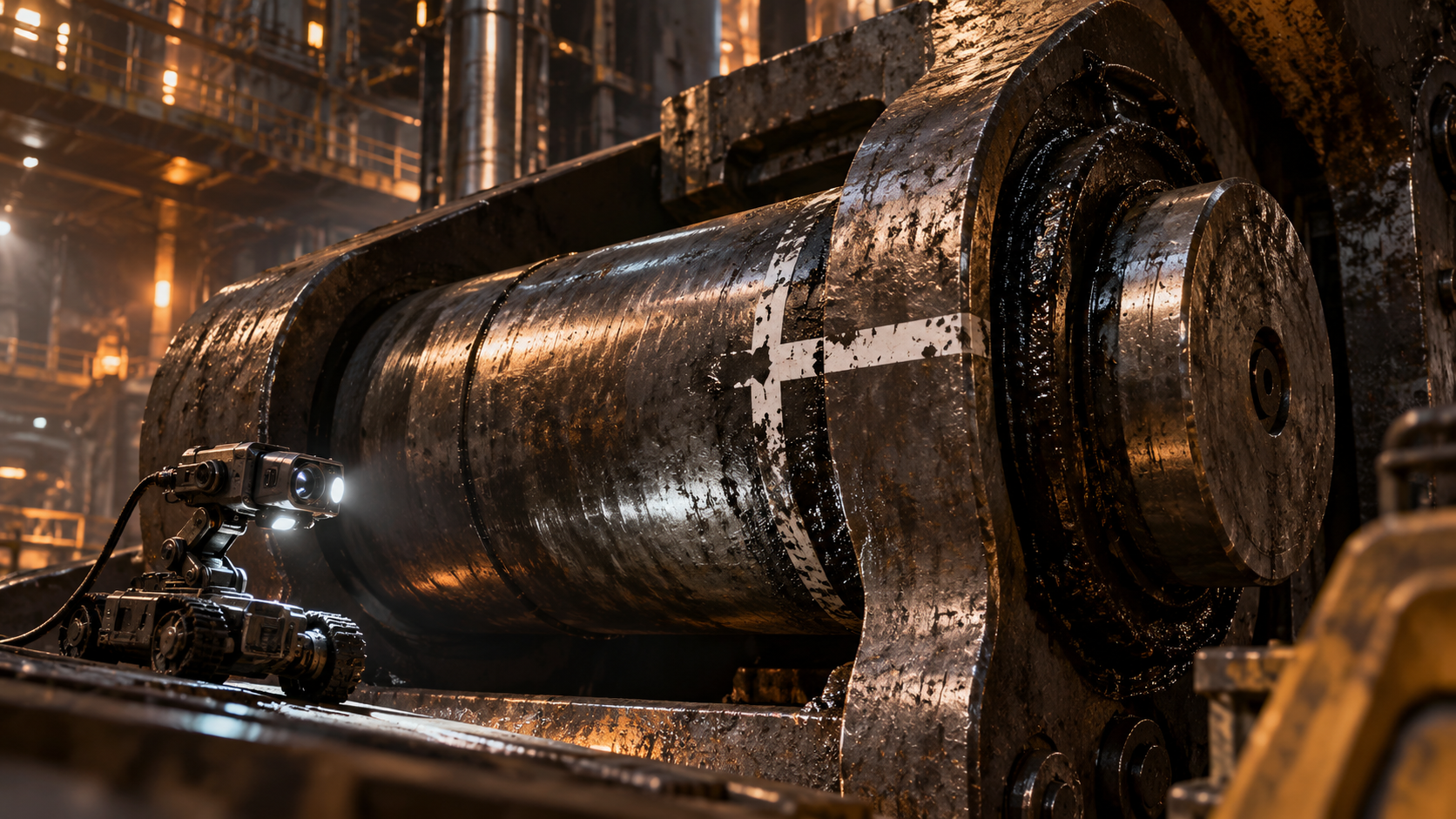
Iona tapped the unbroken maintenance seal visible in the crawler image.
“That doesn't tell us nobody ever changed anything.”
“No. It tells us what we found sealed.”
The fitter wrote that down too.
Operations called while they were preparing the controlled recommissioning plan.
A client wanted an hour. The neighboring shifts wanted their ordinary load back. Someone had priced the accumulated delay and sent the figure with an increasingly polite request for a conclusion.
Ripley looked at the tested replacement, then at the untraced input.
“The mechanical defect has a repair,” he said. “The initiating input is still under investigation.”
“Can the chamber return?”
Iona watched him without helping.
“Under a restricted test after the repair is installed and independently checked. Not general service on this call.”
The supervisor asked whether the fault report would call the event wear-related.
“Wear permitted a release. It didn't supply the request.”
He could hear a second person speaking at the other end. The supervisor muted the channel badly; one clipped syllable came through, then silence.
“Put that in the report,” the supervisor said at last.
“We are.”
It was easier to sound certain about the sentence than about what it would cost.
They retained the worn piece, labeled the replacement and entered the revised inspection requirement. The old input was placed under a documented temporary isolation for the test, after checking what depended on it. Ripley refused to let an unexplained wire become somebody else's unexplained emergency workaround.
At the chamber gate, Iona checked his harness ring.
“I remember,” he said, clipping in.
“Good. Now I don't have to remember for you.”
They passed the memorial plate. Its brass looked darker than the component on the workshop cloth, though both had taken years of heat. Ripley did not touch the lettering. He read the surname he knew belonged to Iona's uncle, then looked back toward the gate.
The fitter stood outside the barrier with the inspection sheet. His new tool bag was secured behind the line.
“You call the clearance,” Ripley told him.
The young man checked the gallery, then checked it again.
“Not yet.”
A service lamp remained inside the exclusion area. Iona collected it. Ripley stayed where he was.
Only after the fitter gave the clearance did they proceed.
The first test used limited pressure and no production load. The holding mechanism stayed engaged when permission was withheld. The authorized movement followed the written sequence. They stopped, inspected and repeated the required checks.
Nothing happened early.
That was the result they had come to obtain. Ripley found he had no appetite for celebrating it.
They left the chamber on restricted status pending the remaining review, with the conditions written where the incoming shift could see them. No one would have to infer the limit from his tone of voice.
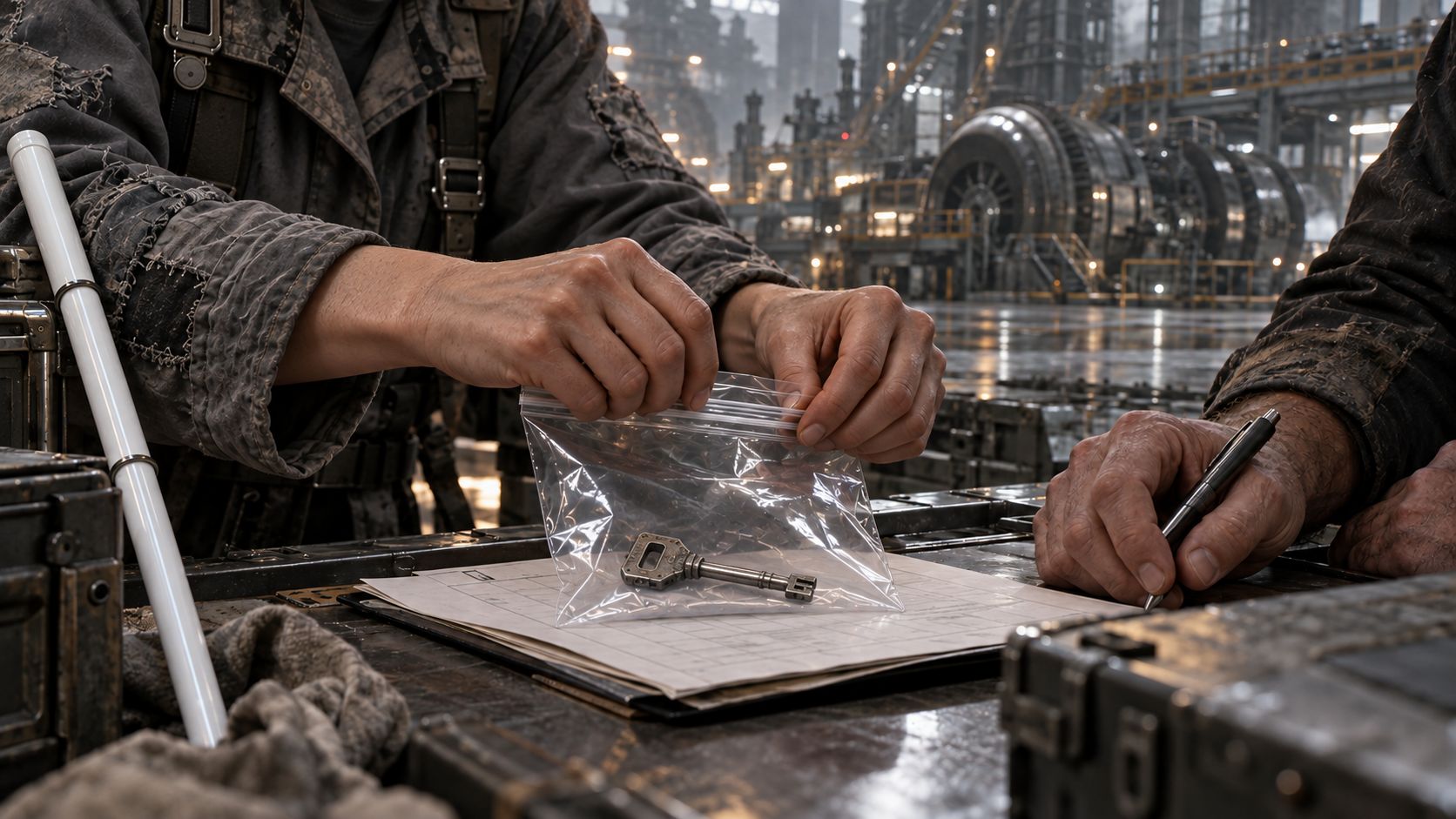
Back in the workshop, the command key from the first incident remained in its sealed evidence bag. The key for the controlled test had its own sign-out record. Iona checked the two entries without treating their resemblance as a reason to combine them.
The fitter asked whether the person who sent the old command knew about the worn part.
“We don't know there was a person,” Ripley said. “And we don't know what the sender knew.”
He almost added a list of possibilities. Instead he showed him where they had written the next test: trace the service line upstream, retaining the original assembly and its records.
Iona wrapped the worn brass in clean tissue. Ripley moved the mug before she had to ask for space.
Outside the workshop, the other circuits kept their patient, reduced rhythm. For tonight, it was a rate they could answer for.