
The Names Below
An old refuge passage has disappeared from the maps but not from the lives around it. Maris gets permission to inspect it—and learns how little a piece of evidence can say on its own.

Captain’s Log: 2734 — Argos
An old refuge passage has disappeared from the maps but not from the lives around it. Maris gets permission to inspect it—and learns how little a piece of evidence can say on its own.
The inspector arrived with a lamp, a pressure kit, and no interest in the seven sounds.
“Door clearances, air reserves, water, structural access,” she said. “That’s the appointment.”
Maris showed her the additional request.
The inspector read it.
“I can preserve a recorder. I can’t tell you what the universe meant by it.”
“That will do.”
Oren Pell stood behind them carrying the certified plans in a rigid sleeve. He had dressed for dust. His shoes suggested that he had forgotten about stairs.
Nine days after the Deep Blink, the station was busy enough that people resented the inspection barrier. A cleaner moved his cart around it and recognized Maris.
“Still the door?”
“Still the door.”
He looked at the inspector’s tools, then at the plans.
“Well. At least it’s getting company.”
The outer latch opened under the inspector’s controlled release.
The movement was heavier than Maris remembered. That did not mean her memory was wrong. She reminded herself of this before she could decide it meant something useful.
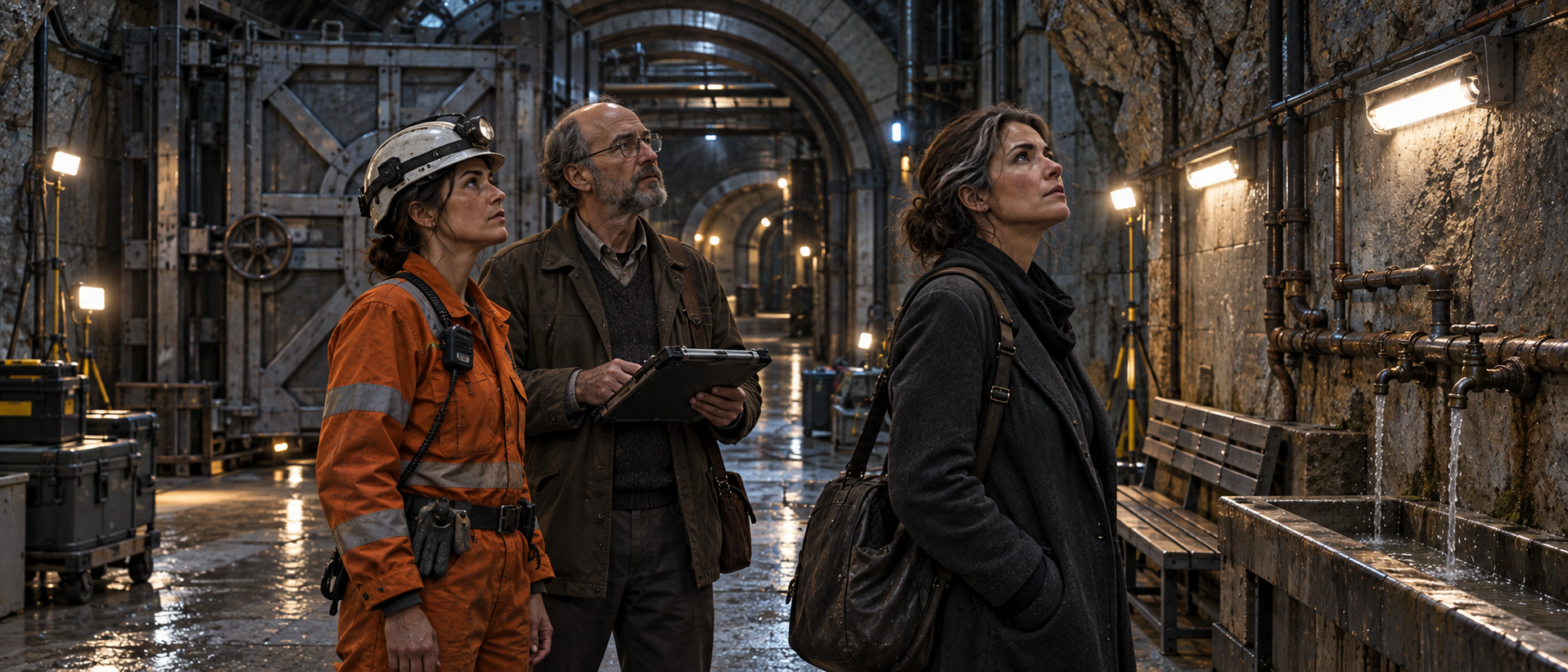
Beyond the door, a passage sloped gently away from the station. The walls carried old pipes behind mesh guards. Low benches lined one side. A handrail had been polished by many years of palms.
The air smelled of mineral dust and cleaning solution.
Oren stopped beside a painted route mark.
“Same bend,” he said, matching it to the oldest drawing.
The inspector checked the atmosphere and waved them forward.
Maris had imagined a sealed chamber. She found a place somebody swept.
Near the first water point, two dated service tags hung from a valve. They were recent. The building registry might have forgotten the passage, but a maintenance crew had been bringing tools into it all along.
At the far end, the manual door opened toward the residential terrace she had visited with Oren. From this side, the handwheel turned smoothly.
“You’ll need to move those chairs outside,” the inspector said.
“Already arranged.”
“And replace the emergency lamp there.”
She pointed. Oren wrote it down.
“Water reserve passes. Air supply passes. No structural concern on this inspection. I want the gate clearance measured again after the chairs move.”
The list was short enough to make Maris angry.
Years of disputed access, and the route needed a lamp and room for a door to swing.
The recorder sat in a narrow metal box beside the station mechanism.
Its cover had been painted shut. The inspector scored the edge carefully, collected the flakes, and opened it with a tool that looked too ordinary for the attention Maris was giving it.
Inside were a clock unit, a paper spool, and a bank of small mechanical marking arms. Oren leaned forward.
“Don’t,” the inspector said.
He leaned back.
The device recorded selected inputs and physical movements independently of the newer network controller. A recent service sticker explained why it still had paper. Nobody had regarded the recorder as mysterious enough to stop replacing the roll.
Maris felt a foolish little disappointment, followed by gratitude.
“Can we establish the time?” she asked.
“We can compare the clock to a reference now. That gives us a present offset. It doesn’t guarantee the offset was identical nine days ago.”
The inspector photographed the mechanism and made a controlled test mark.
Then she advanced the roll toward the previous maintenance entry.
The paper was thin and cream-colored. Most of it carried ordinary checks: a marked input, a corresponding movement, the occasional handwritten service notation.
One section was different.
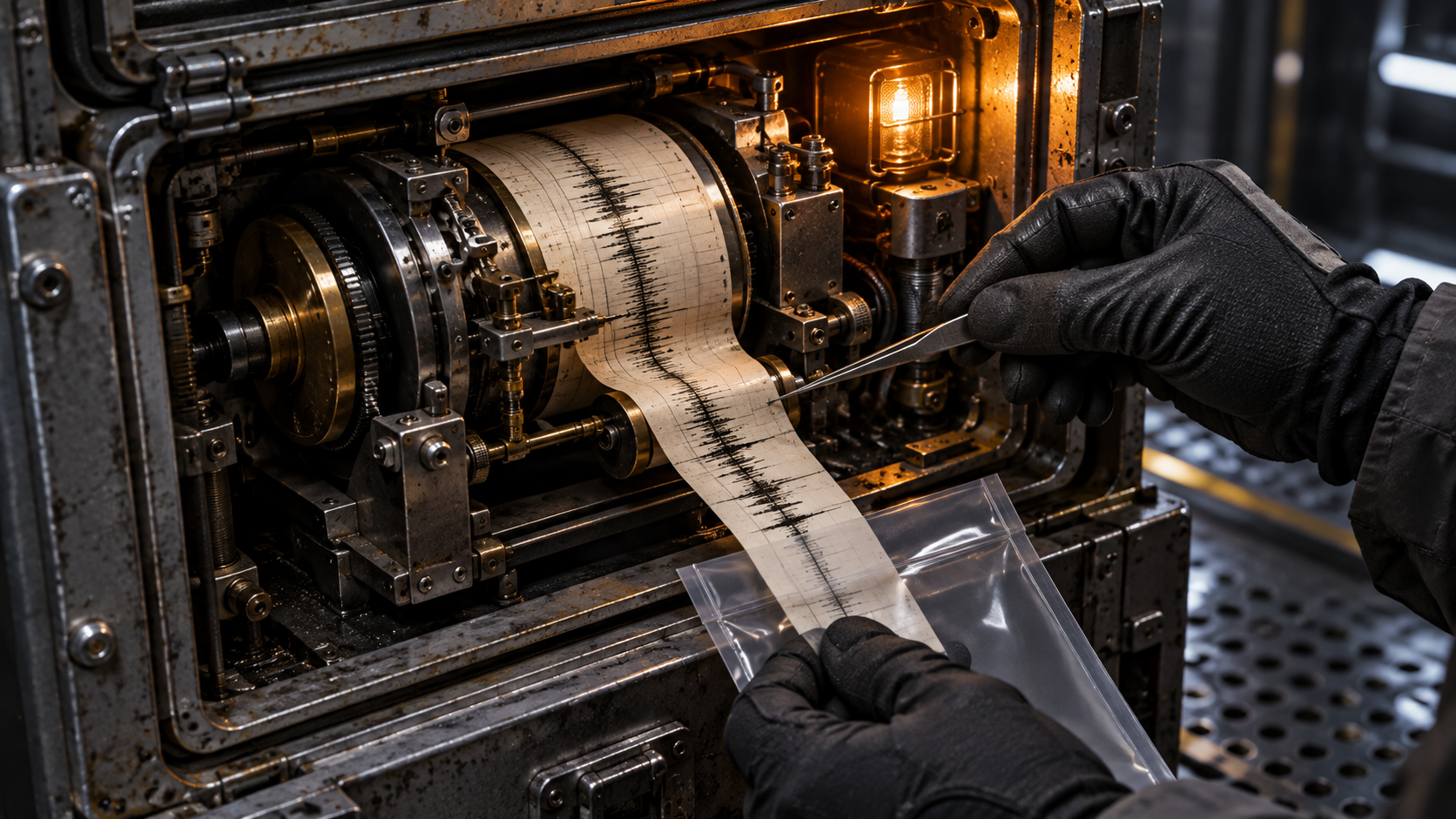
A sequence of short marks occupied an input lane. A separate lane recorded the latch withdrawing and returning. The marks lay near the clock position Maris had supplied, allowing for the measured offset.
She bent closer.
“Seven?”
The inspector counted without answering her first.
“Seven marks in this lane.”
“And the door moved.”
“The latch cycled. We need the channel definition before saying what this input was.”
“It happened.”
The inspector looked at her.
“Something happened here. Preserve that sentence at its actual size.”
They took the relevant strip in a sleeve, with photographs showing where it had been removed. The inspector installed a new roll and entered the reason in both maintenance systems.
Oren found the channel key in the drawing packet. The input was designated for an older remote service link. Its current connection status was unclear.
That mattered. The recorder had not captured sound. It had registered electrical activity on a particular line and a mechanical response. The match to what Maris heard remained something to investigate.
She wrote all of it down.
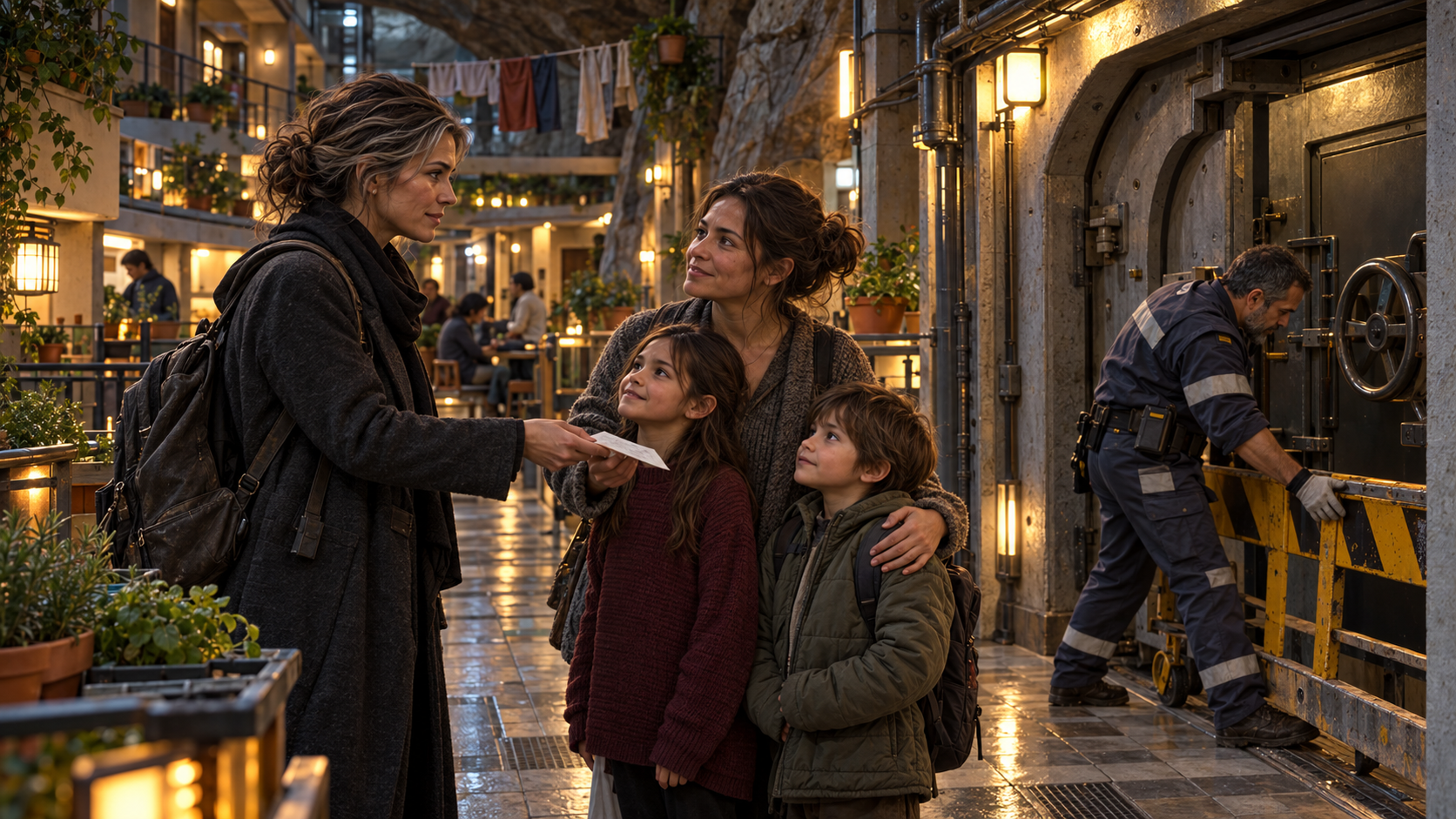
By the time they reached the terrace, the chairs were gone. The woman from the housing counter had persuaded two neighbors to clear the alcove. Her children watched from the laundry doorway, each holding a different end of a broken hanger.
The inspector measured the swing clearance, replaced the failed lamp from her kit, and entered provisional access approval. A complete map correction would take longer. The passage could be available to the residents meanwhile, under its existing refuge procedure.
The woman read the receipt.
“So if we need it, we can use it?”
“Yes.”
“Without calling?”
“Yes.”
She folded the paper once and held it very carefully.
Maris gave her a second copy.
At the archive, Oren made a scan of the recording strip without altering the image. He included the sleeve, the scale, and the inspector’s labels in the frame.
“You could publish this,” he said.
“I could publish a photograph of seven marks. Someone would explain the galaxy underneath it before lunch.”
“What will you do?”
“Get the channel traced. Find out what could send on it. Ask for the original service specification.”
She opened the reply Nolan had sent through the relays. He had offered to preserve his receiver archive. He had also asked whether she was all right.
She had answered that part already. The first answer had been more efficient than true.
Now she sent him the inspection summary, the clock caveat, and the photograph. She omitted the residents’ names and addresses. He needed the evidence, not access to their lives.
Then she added a separate line.
I was frightened. I’m less frightened now that there’s something to check.
She waited before sending it. Oren was busy labeling the duplicate and did not look over.
Maris pressed send.
That evening, she took the train through the station where it had begun.
The maintenance barrier was gone. Beside the service door, a temporary notice explained the restored refuge access in large plain lettering. Someone had already marked a small correction to the map with a pencil.
Across the platform, the white flowers had been removed from the bench. In their place sat a shopping bag and a child’s knitted cap, watched by a man fumbling with a drinks lid.
The door looked ordinary.
Maris knew now who cleaned its passage, who checked its water, and which homes depended on it. The seven marks in her bag had supplied none of those answers. People had.
When her train came, she boarded.
She had a lamp to buy for the shuttle and a seal she had put off fitting for too long. The work on the door could wait until morning.