
The Price of a Person
When Phox loses a recovery contract over the right of a witness to walk away, Lloyd follows the closing account back to an older set of instructions.


Captain’s Log: 2734 — Gemini Star
The client sent the rejection while Lloyd was calculating what it would cost to keep the job.
He had reduced the berth allocation, cut his own travel allowance, and taken out the contingency for a second pursuit vessel. A decent margin remained if the client agreed to pay for interviews as they happened. On the opposite side of the table, Brick was trying to get a folded receipt to lie flat beneath a mug.
Lloyd read the message again. The client had appointed another firm. The interim authorization would end at noon. The depot expected its equipment back.
“What did they say about the witnesses?” Brick asked.
“Nothing.”
Brick lifted the mug. The receipt curled up again.
It was for an hour of the cleaner’s time. She had come at ten, as agreed, and had brought a list of the cartons she had been able to salvage. She knew nothing about the missing consignment. She did know that half the supposedly spoiled filters had been collected by people who could use them, and she wanted that entered on the depot’s claim.
Lloyd had told her he could put it in his report. Now there would be no final report.
He opened the interim account and authorized the hour.
“Phox pays her,” he said. “We don’t wait for reimbursement.”
Brick nodded, as though Lloyd had read out a berth number they both already knew.
Lloyd looked at the old agreement. He had written the counteroffer at this table, with Brick leaning over the screen to make sure the right to leave was plain enough to survive an argument in a depot office. A witness could choose when to speak. They could stop. If the client wanted someone detained, it could ask an authority that had the right to say no.

The request to return the equipment was a different matter. The depot owned its latch. It also had an interest in putting it back into service before anyone else had examined the release sequence. Both things could be true.
The independent store sent its intake receipt just before noon. It listed the assembly’s seal number, the matching controller and a mechanical counter with its position recorded. The store would hold the parts under the temporary agreement until the return dispute was resolved.
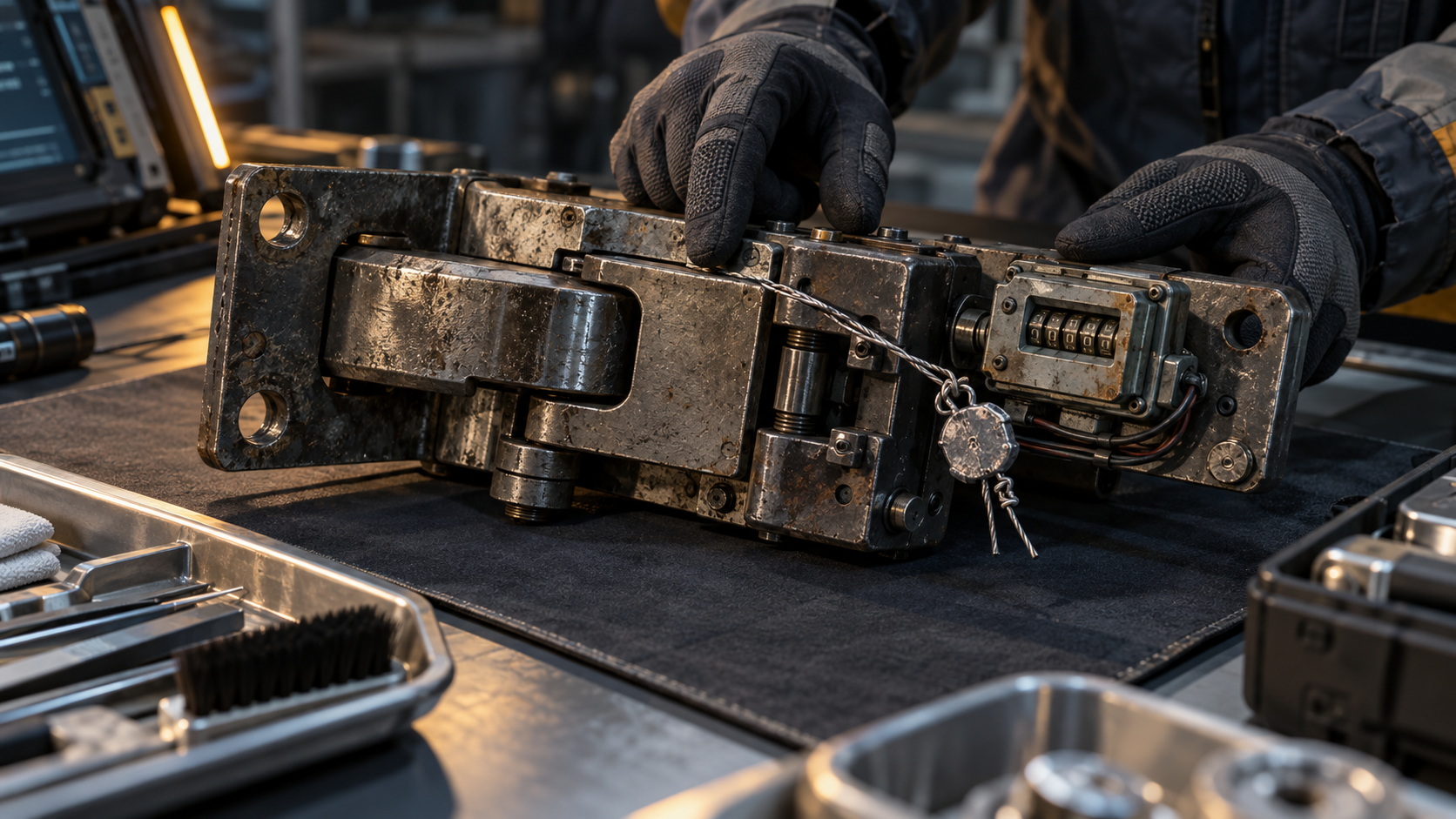
Brick read the receipt over Lloyd’s shoulder.
“They got the counter in the photograph.”
“I asked them to.”
“I know. I was checking that they did.”
Lloyd looked at him. Then he opened the photograph himself. The position was legible.
“Good.”
On another job, years earlier, he had let a client send a late change to a route by voice. He remembered agreeing because the change sounded small. He remembered the call far better than he remembered the road. There was a whole shift of people for whom that distinction was useless.
He entered the store’s reference number twice, once in the job file and once in Phox’s own register.
The closing statement arrived with a deduction for an unused recovery authorization.
It was not much money. He might have approved it on a busier day. The problem was that the statement described the authorization as having been reserved by Phox before Brick had set foot in the depot.
He expanded the charge.
The reservation was older than the contract.
Lloyd put his figures aside and pulled up the service sequence the depot had supplied. A short category code sat beside the authorization line in both records. On the service sheet it meant an inherited release procedure. On the client’s statement it meant an expense for securing a recovered asset. The difference would have been unremarkable if there had been two numbers. There was one.
He checked the statement against the work order the client had sent on the first day. Both had an attachment for expenses imported from the depot’s system. The first version had kept the inherited description. The closing version gave the same entries newer names. The old instructions had become billable work, with Phox listed as the operator on paper.
Brick came back from the galley carrying bread on a plate.
“Look at this,” Lloyd said.
Brick set the plate on the receipt to keep it flat.
“Are they charging us for opening the cage?”
“They’re saying we brought an authorization with us. It was already in their account when they hired us.”
“Did they open it?”
“This is a bill, Brick. I’d like it to be a confession.”
He showed him the two attachments. The reference and reserved units carried through from one version to the next. The wording had been replaced. Elsewhere in the account, the same modern category covered return transport, storage, and the compulsory witness transfers Brick had removed from the contract. The statement could put all of it under a recovery firm’s name without distinguishing which obligations that firm had actually accepted.
Brick reached for a piece of bread. “Would our signature have put that right for them?”
“It would have given them someone to send the bill to.”
“And the people.”
Lloyd went back to the old contract and read the custody schedule a third time.
The depot representative called at the end of the shift. He wanted to know why the closing balance had not been accepted.
Lloyd asked who had requested the reservation. The representative said it was a standing client allowance. Lloyd asked who had carried it into the new account. The representative said the entries were imported from the previous system. He gave Lloyd the name of a desk that no longer took calls.
“I can have finance remove the deduction,” the representative said.
“I want both versions of the statement retained.”
“Do you want your money or a statement?”
“Today I want a statement.”
The man said he would refer the matter. He did not say where.
When the call ended, Lloyd saved the two versions with their original receipts. He asked for the records that could show whether any of the old authorizations had been issued, and from which desk or device. The counter established a sequence. The bill established what the client had called it afterward. He could not use one to fill the empty spaces in the other.
Brick was dividing the bread. The piece he put down beside Lloyd was slightly larger.
“How long before we have to give back the latch?” he asked.
“Long enough to file a dispute.”
“Can we afford it?”
“Not if I use the figure I had this morning.”
Lloyd cleared the lost contract from the forecast. Berth fees remained. So did the store’s charge and the cleaner’s hour. He left them where they were. Then he opened a separate line for the inquiry, with a limit and a date when the two of them would have to decide whether to keep paying.
Brick sat down again. Lloyd turned the screen so they could both see.