
A Price for Silence
Leila has a cylinder that names The Constellation as its return destination, a passenger who wants his pay, and a potential buyer who knows better than to sound interested.


Captain’s Log: 2734 — Aboard the Serendipity
Leila has a cylinder that names The Constellation as its return destination, a passenger who wants his pay, and a potential buyer who knows better than to sound interested.
The young man had eaten everything in the compartment except the emergency paste.
Leila considered that a sign of character.
He stood when she opened the door. The bedding was folded on the seat behind him. He had examined the service hatch, she noticed, but had been sensible enough to put the screws back.
“Name,” she said.
“You hired me.”
“I hired a tractor and a temporary identity. I’m reassessing the purchase.”
“Tavi Ren.”
“Real?”
“Real enough to pay.”
She transferred the agreed amount to the account he provided. He checked it without pretending the gesture was rude.
“And the bonus?”
“You arrived aboard a battleship instead of in a holding cell.”
“You told me the booth was empty.”
“It was.”
“You left out the rest.”
Leila leaned against the hatch.
Tavi had a bruise along one jaw and a strip of red skin where an Argonaut restraint had caught his wrist. Neither injury made him look more formidable. His determination therefore interested her a little.
“What do you think the rest was worth?”
He named a figure. Too high, but not impossibly high.
She reduced it. He reduced it less.
They settled at a number that annoyed them both.
“Now,” she said, “tell me who else has your account of the evening.”
Tavi stopped looking at his terminal.
He had sent a message from the shuttle before she locked him in the compartment.
No photographs of the case. No recording of the reader. Only his pickup instructions, the contractor identity, and the depot location. A friend would receive the rest if he failed to check in.
Leila disliked the arrangement chiefly because she would have recommended it.
“You were supposed to touch nothing.”
“My terminal was already mine.”
He had been paid to drive a tractor through an empty booth. He had done it. Other people had supplied the arrest, the smoke, and the unauthorized trip into orbit. He repeated these facts with the stubborn accuracy of someone who knew eloquence would weaken his position.
She could keep him aboard, search his equipment, and find the friend. Each step would create more people who knew there was something worth suppressing.
Outside the compartment, a crew member waited for instructions about their departure. The Serendipity could not occupy the same convenient patch of sky forever. Phox had stopped accepting the valve explanation with grace.
“Send your friend a check-in,” Leila said. “Nothing about the cargo.”
“I don’t know anything about the cargo.”
“An excellent habit. Keep it.”
Darius Meister accepted the call on the second attempt.
His image appeared at the far end of Leila’s table. He was seated somewhere aboard the Emperor, with no useful background visible. A shallow cup stood near his hand.
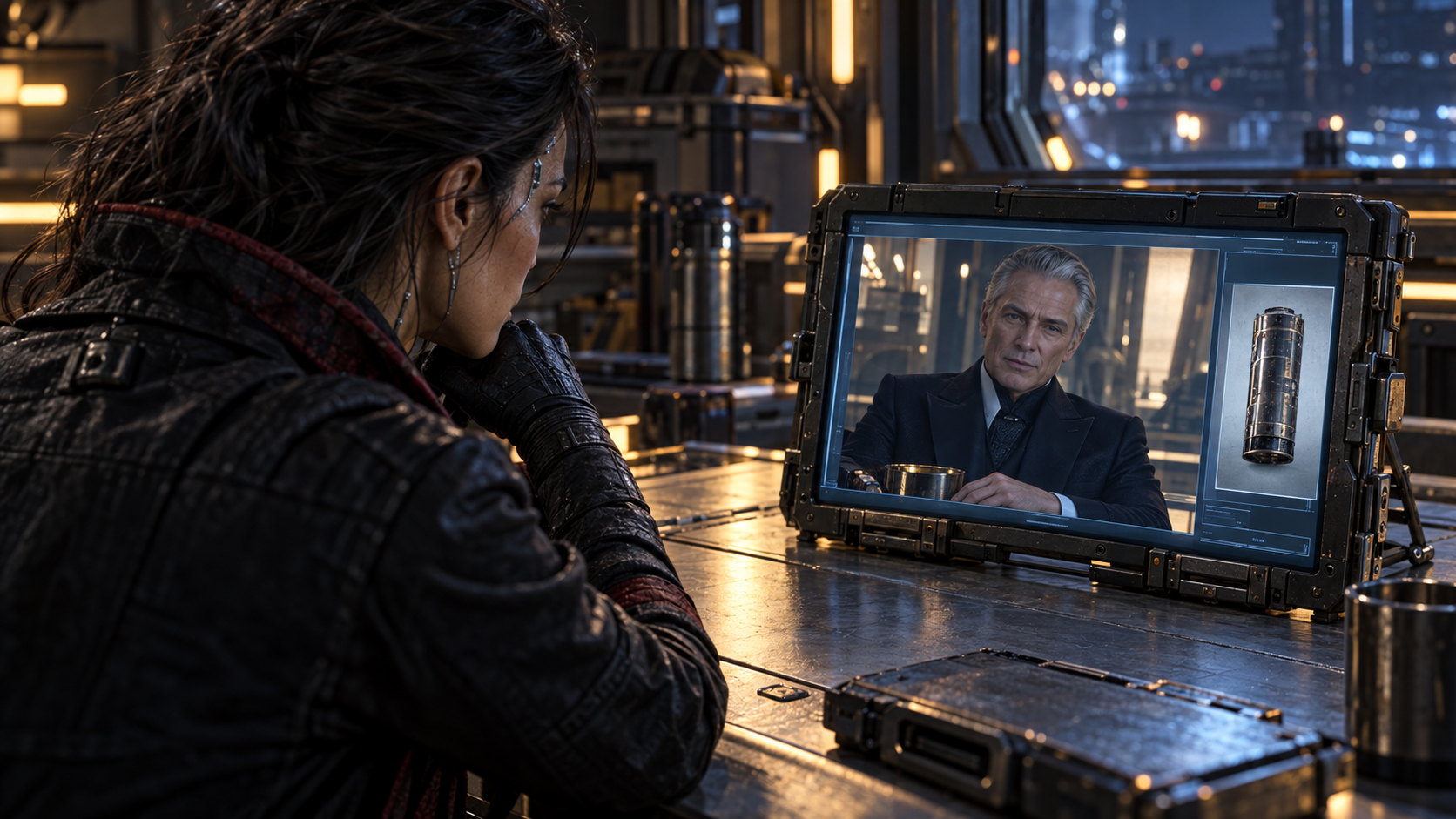
“Captain Darkstar.”
“You sound delighted.”
“You are using a frequency generally reserved for completed contracts.”
“I’m broadening its appeal.”
She transmitted a photograph of the cylinder’s outer identifier. Nothing from the reader. Nothing that named its return destination.
Darius studied it.
She had expected a flicker of recognition. He had spent a lifetime ensuring that people could not afford to rely on one.
“Where did you obtain this?”
“A distressingly expensive evening.”
“What is your question?”
“Authenticity.”
“That depends on what you believe it authenticates.”
“I hate conversations with you.”
“You initiate a surprising number of them.”
He enlarged a section of the image. Her terminal showed the region he requested: three small marks beside the identifier.
“The format is old,” he said. “The object carrying it may be less so. That numbering convention remained in commercial use long after its original registry ceased to be useful.”
“How long?”
“Long enough.”
“And if an old object still knows where it belongs?”
Darius looked up.
“Addresses survive their occupants, Captain.”
She held his gaze.
He could have been warning her against a foolish interpretation. He could have been asking how much she had read. Both possibilities required her to say less.
“What would you pay to examine it?”
“I would need to see the object.”
“You’re looking at it.”
“I’m looking at a photograph you have cropped.”
“Some of my finest work.”
He made an offer for temporary custody, verified condition, and return by an agreed date. The sum was lower than she hoped and higher than she wanted him to think the cylinder deserved.
She refused.
Darius lifted his cup.
“Then we have both learned something.”
The connection ended before she could ask what he thought he had learned.
In the inspection bay, the cylinder remained inside its shielded hood.
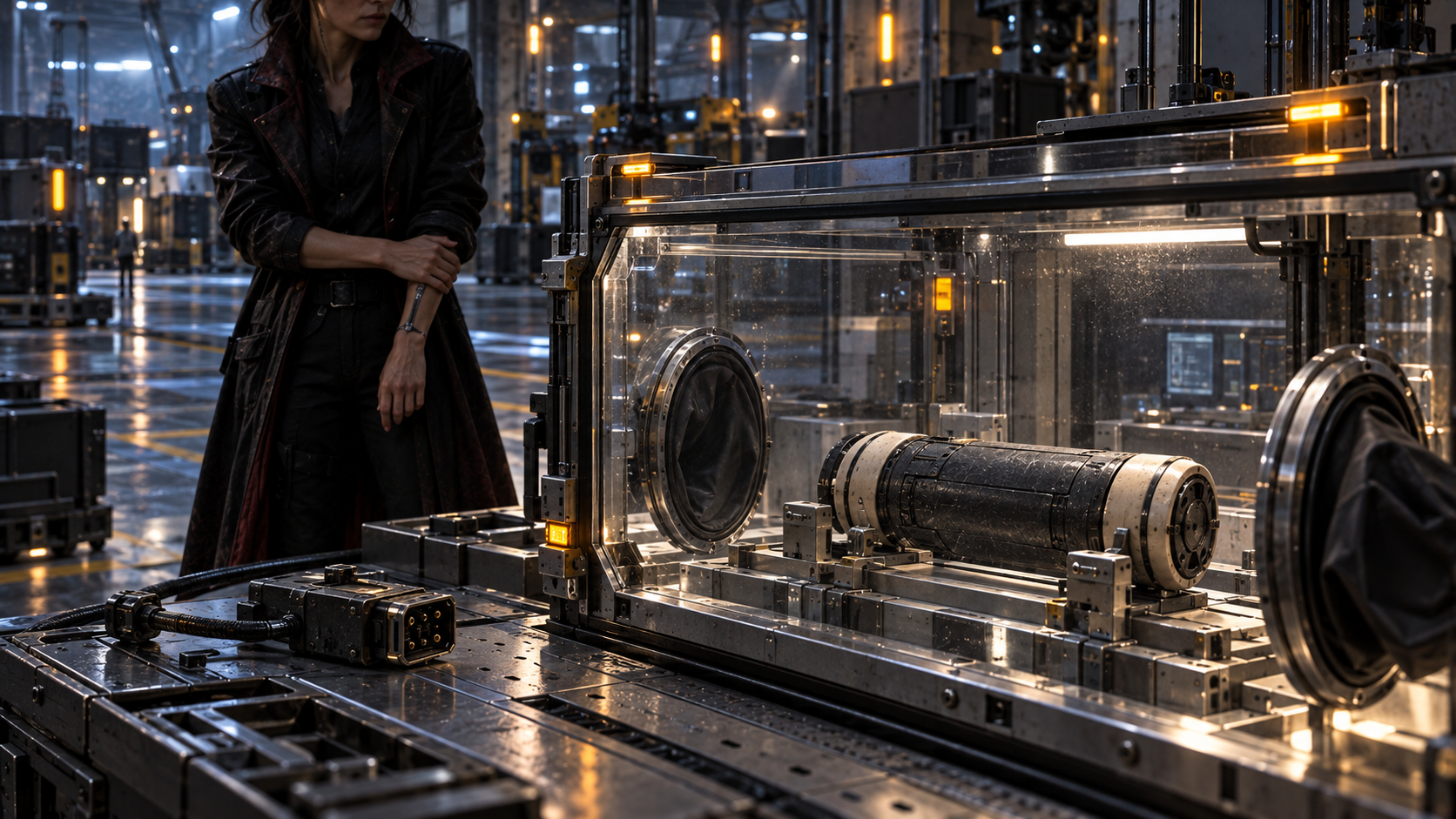
Leila approached with her left sleeve rolled above the wrist. At two paces, the ache began. At three, it eased. She repeated the movement, irritated by the spectacle she was making for an empty room.
This was a test. It should have produced a useful distinction.
Instead she had learned that she disliked standing near the thing.
She placed an ordinary diagnostic source inside the adjacent hood and walked between them. Her wrist complained at neither predictable interval nor constant intensity. Fatigue, interference, expectation: the list of explanations was long enough to be useless.
She wrote down the results anyway.
Then she looked again at the return instruction on the disconnected reader.
The Constellation.
A schoolroom name. A museum name. An excellent name with which to persuade an impatient buyer to pay for something they did not understand.
She could build a lie around it by the end of the shift.
For once, she would rather know whether someone had already built one around her.
She powered down the reader without making another query.
Tavi was waiting beside the shuttle hatch with a borrowed coat over one arm.
“Crew issue,” Leila said.
“Mine’s at the depot.”
“Many interesting things are at the depot.”
He put the coat back on its hook.
She gave him a departure berth at the civilian ring and enough credit to reach the surface. His payment included a narrowly phrased agreement: he would not identify her current cargo or disclose the ship’s internal layout. She had abandoned the demand that he say nothing at all.
He read every line.
“No claim that I worked for Phox.”
“I hadn’t considered it.”
“You paused.”
She removed the clause granting her discretion over his public employment description.
He signed.
At the hatch, he turned back.
“The man in the booth,” he said.
“What man?”
“The relief clerk. He came out before I hit it. I waited.”
Leila regarded him.
The booth had been empty when the tractor struck. She had not arranged the clerk’s departure. In the rush of events, she had credited her schedule with a piece of competence it did not possess.
“That cost time,” she said.
“Yes.”
He waited for her to tell him he had jeopardized the operation.
She opened the hatch.
“Try not to spend the bonus before you get home.”
After he left, she sent an amended destination to the bridge.
Ashfall Quay. A neutral berth, independent inspection equipment, and people who charged more for questions than for repairs.
The pilot asked what to enter in the cargo declaration.
Leila considered several possibilities and chose the least interesting one.
“Used equipment,” she said. “Awaiting assessment.”